


“To choose an orthopedic mattress, start from your own needs: your weight, your sleeping position, and your partner's if you share the bed. An orthopedic label is not enough if the mattress does not suit your body.”
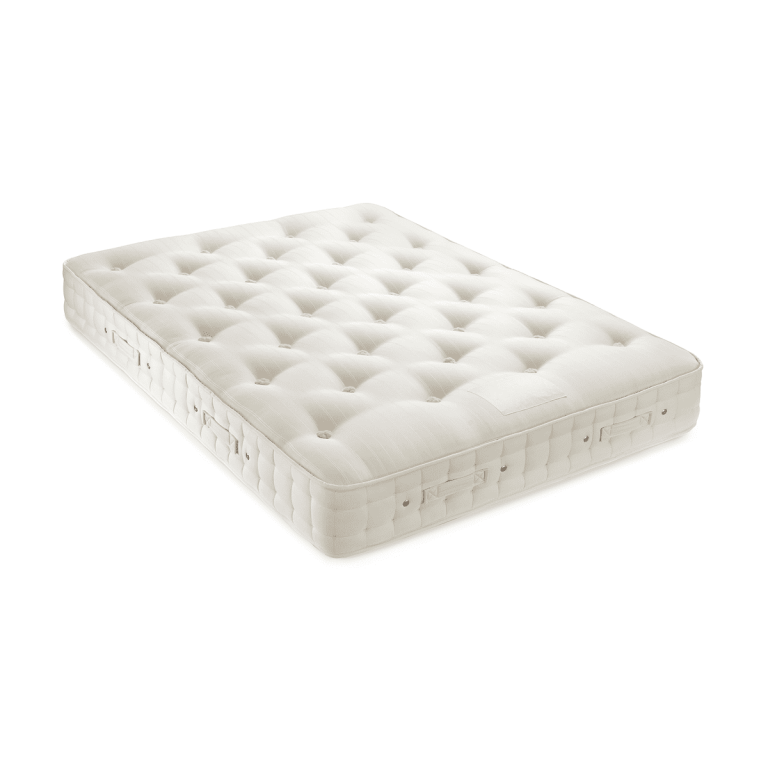
An orthopedic mattress, in UK shops, is usually a firm or extra-firm pocket-sprung mattress sold for back and joint support. Bed Advice UK, the consumer site of the National Bed Federation, says terms like “orthopaedic” vary by brand and “don’t follow any universal firmness standard”. So judge an ortho mattress on four things you can check yourself, which are its firmness against your weight, how the springs are built, whether it can be turned, and the price in your size.
What the orthopedic label means
The Advertising Standards Authority treats orthopedic wording as a health claim. In a ruling published on 18 December 2024, it upheld a complaint against Origin Mattress over website claims including “Orthopaedic Back Support” and set out the proof it expects: “We therefore expected to see robust documentary evidence substantiating those various claims, consisting of clinical trials conducted on people.” Origin had sent no evidence at all, so treat the word as a claim and check the build for yourself.
Medium-firm or firm
For a long time the firmest mattress possible was thought to be the best for your back. The research points elsewhere: you need support firm enough deep down to keep the spine aligned, with a softer surface that follows the shape of your body. The strongest evidence is a randomised, double-blind trial published in The Lancet in 2003 (Kovacs et al.), which gave 313 adults with chronic low back pain either a firm mattress, rated 2.3 on the European H(s) scale where 1 is the firmest and 10 the softest, or a medium-firm one rated 5.6. After 90 days the medium-firm group had better outcomes for pain in bed (odds ratio 2.36) and for disability (2.10). A 2015 systematic review of 24 controlled trials in Sleep Health (Radwan et al.) found that a mattress described as medium-firm and self-adjusted (custom inflated) was optimal for sleep comfort, sleep quality and spinal alignment.
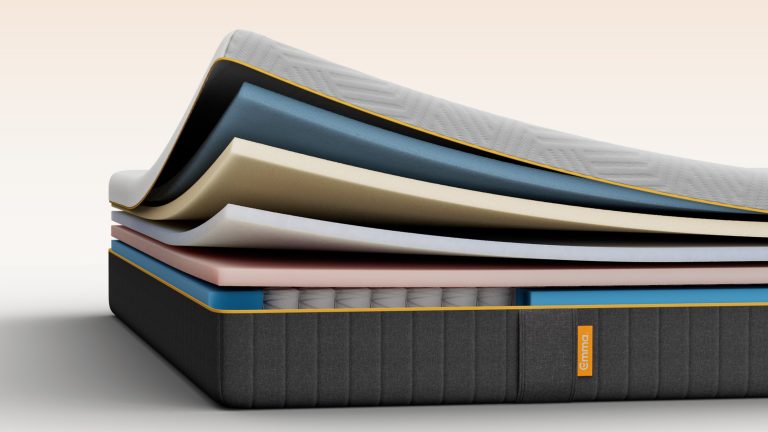
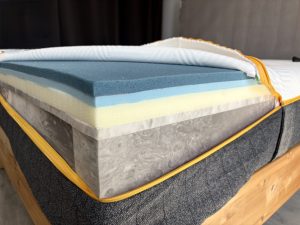
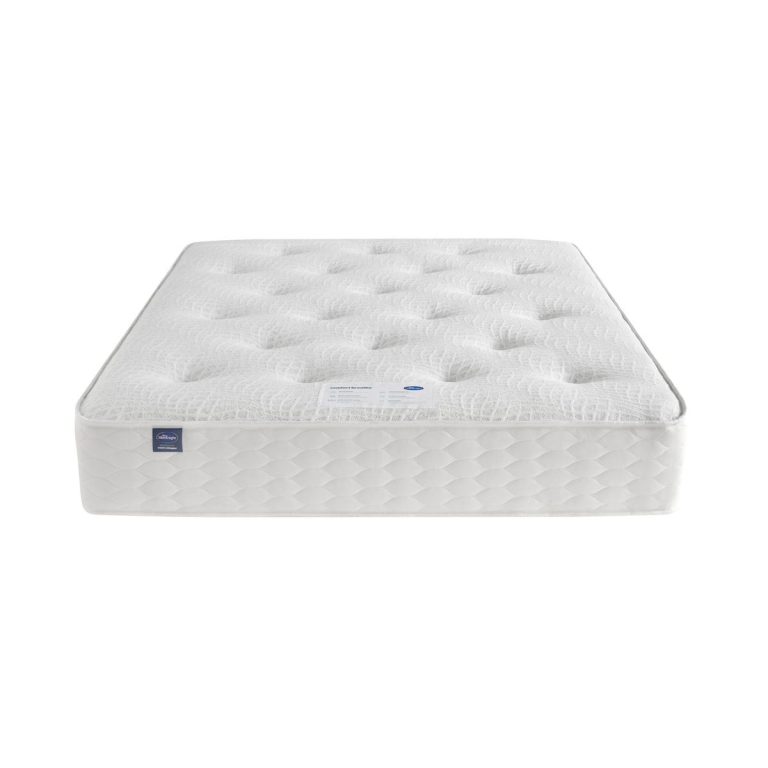
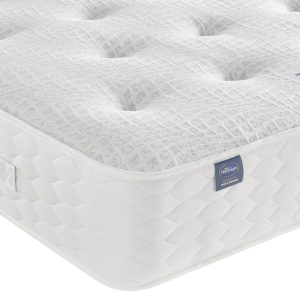
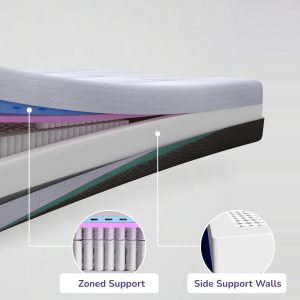
That explains the success of hybrids, with springs deep down under memory or softer foam, and of multi-foam mattresses, with firm high-resilience foam below and memory or softer foam on top. Firm still has its place for heavier sleepers, as with the Silentnight 1400 Pocket Ortho and the OTTY Extra Firm Hybrid. If you are lighter and sleep on your side, a firm ortho mattress is more likely to press on your shoulder and hip, so look at our side sleeper and soft mattress rankings instead. Our best mattresses for heavy people compare firm picks by weight rating, and best mattresses for back pain looks at pain by sleeping position.
Read spring counts with care
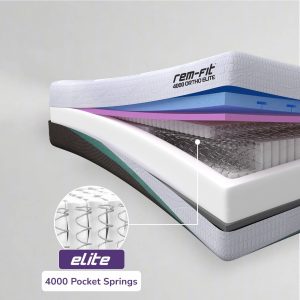
The number in an ortho mattress’s name rarely applies to every size. John Lewis lists the spring count per size for its own Ortho Pocket Collection 1400, and it is 819 in a single against 1,435 in a king. Some headline counts also add two kinds of spring together, mini or micro springs on top of the main unit, so a 4,000 figure is not twice the support of a 2,000 one. Tension and zoning tell you more about support than the total. Our Hypnos and Silentnight range comparisons set these ortho models against each maker’s other mattresses.
Turnable or one-sided
A double-sided mattress lets you flip it as well as rotate it, which spreads the wear over two sleeping surfaces, and Sealy’s guarantee terms require double-sided mattresses to be turned and rotated head to toe. A one-sided hybrid only needs rotating, which suits anyone who cannot lift a heavy king, and the Turnable column below shows which is which.
Specifications below come from each mattress’s UK product page.
Prices for each pick in the four main UK sizes, checked on 28 September 2026 (the Aspire on 16 October 2026).