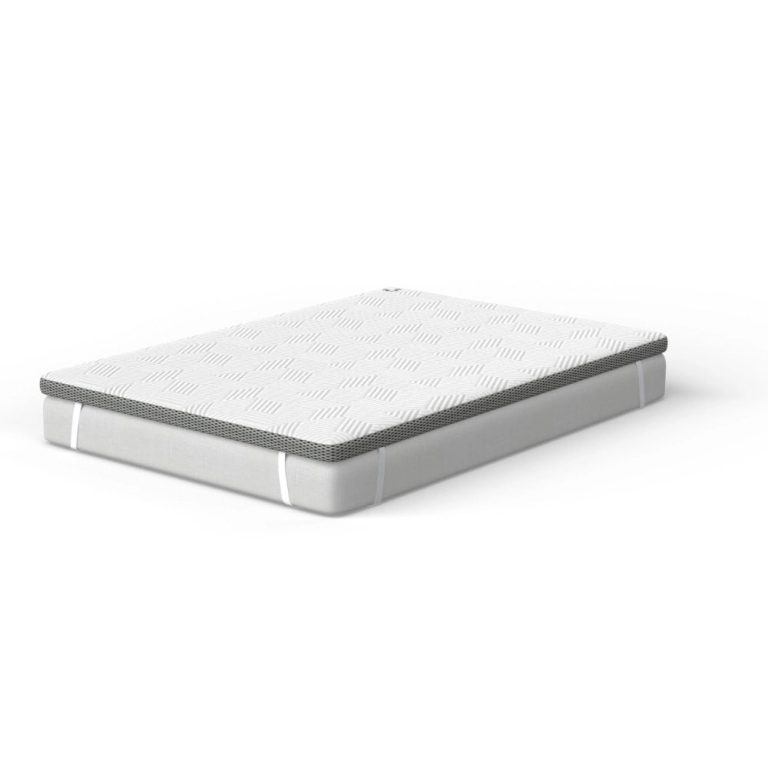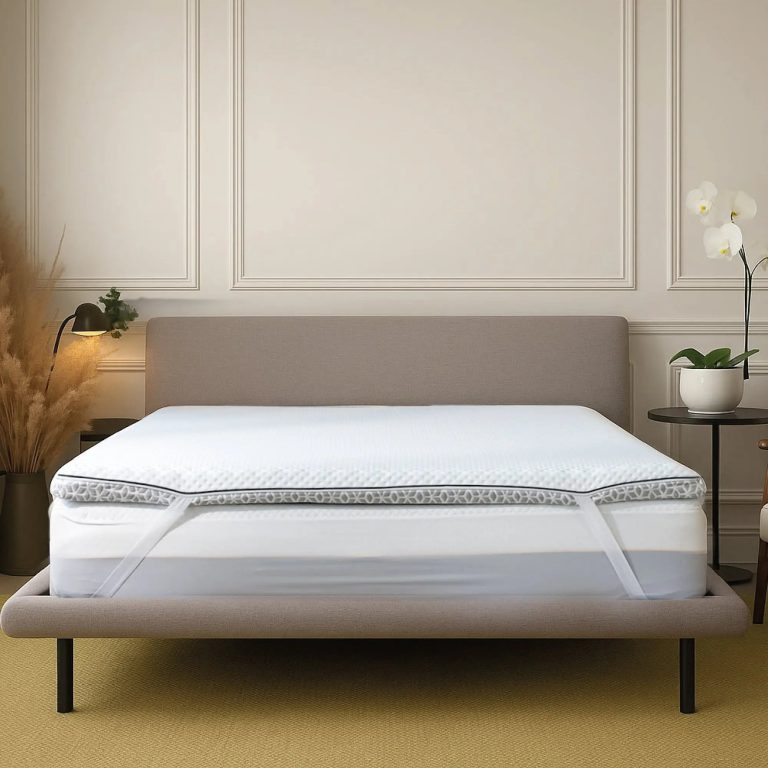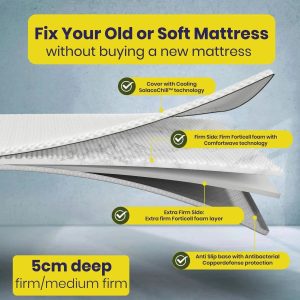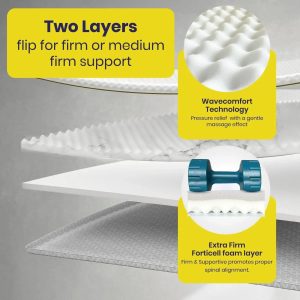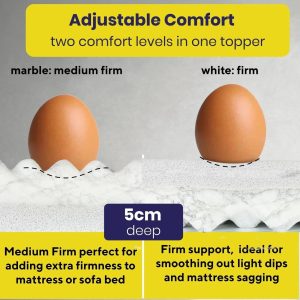


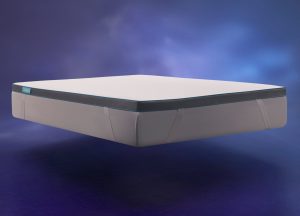
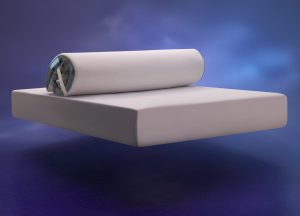
“Buy a firm topper for a mattress that feels too soft but still holds its shape, and choose it by material and depth before the firmness label, because reflex foam, latex and microsprings push back where thin memory foam simply moulds.”
What a firm topper can and cannot fix
A firm topper changes the surface you lie on, not the support underneath it, so it suits a mattress that is still sound but feels too soft. The National Bed Federation says a firmer topper “can give extra support to a too-soft bed”, but that on a mattress with deep dips “any topper you put on it will quickly mold to those same dips”.
The NBF’s FAQ describes a failed mattress as one with “a distinct lack of support, almost a sensation that you can feel right through to the bottom surface of the mattress”, and its new-bed checklist flags a mattress older than seven to 10 years. If yours sags or is that old, look at our firm mattress comparison instead. Check the base too, because the NBF notes that rigid slats and a solid-top divan both make a mattress feel firmer than sprung slats or a sprung-edge divan.
How firm to go
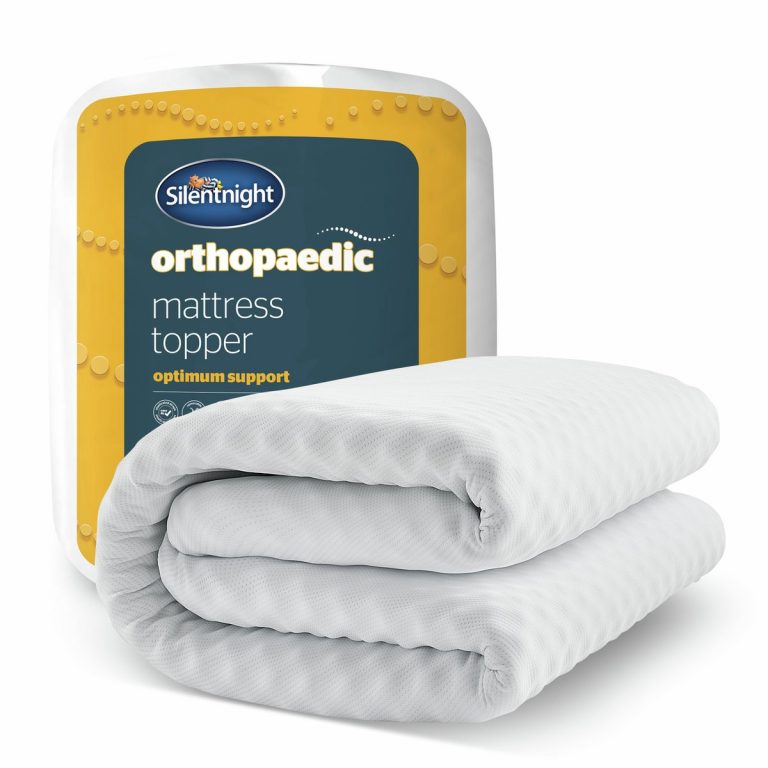
Firmer is not automatically better for your back. In a randomised, double-blind trial of 313 adults with chronic low-back pain, published in The Lancet in 2003, people given medium-firm mattresses (5.6 on the European Hs scale, where 1 is the firmest) did better after 90 days than those given firm ones (2.3), with odds ratios of 2.36 for pain in bed and 2.10 for disability. A 2015 review of 24 controlled trials in Sleep Health found medium-firm, self-adjusted mattresses optimal for sleep comfort, quality and spinal alignment. The NBF adds that the old belief in a hard bed for a bad back “could in fact cause more damage”, and calls orthopaedic “a term loosely used by manufacturers to refer to extra firm models in their range”.
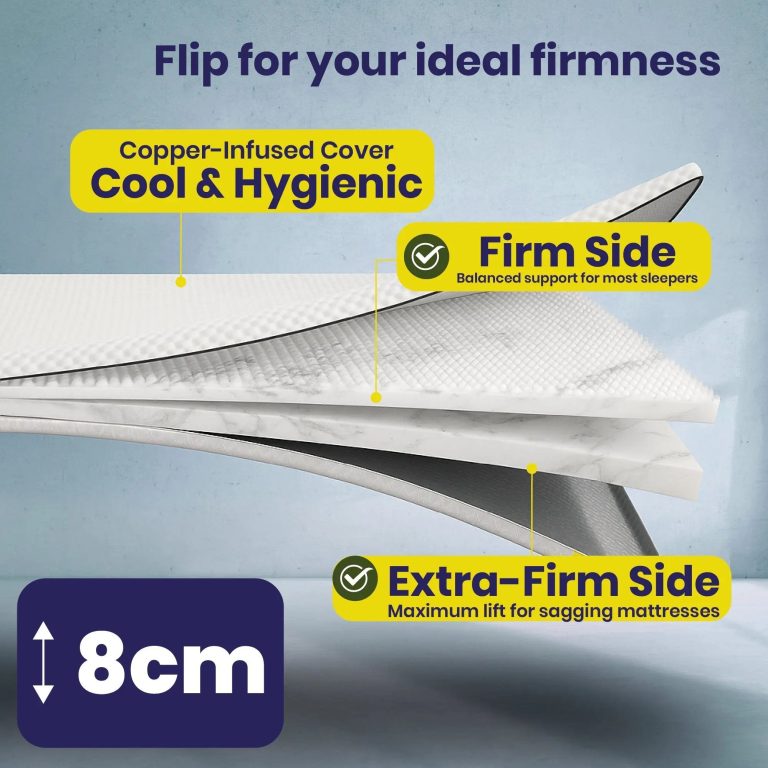
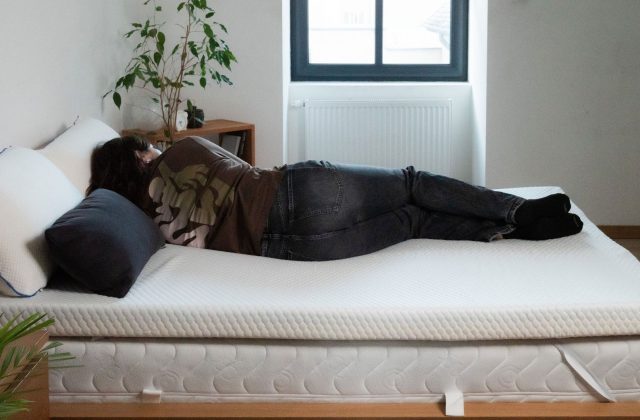
Your position and weight then decide how far past medium-firm to go. Back and front sleepers, and heavier people whose hips sink into a soft mattress, have the most to gain from a firm or extra firm surface. Side sleepers need the shoulder and hip to sink a little, which is why Emma tells back and stomach sleepers to put the firmer HRX side of its Original Topper face up and side sleepers the softer Airgocell side.
Material and depth
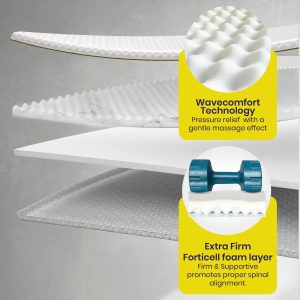
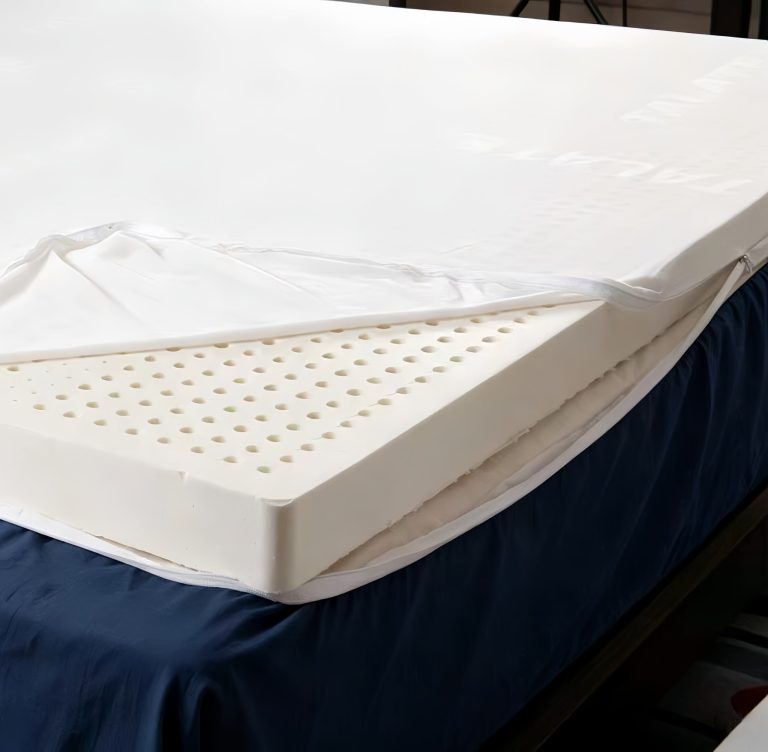
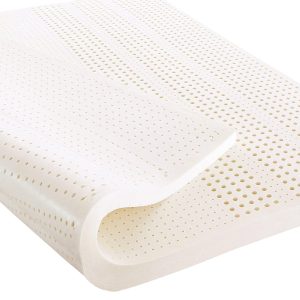
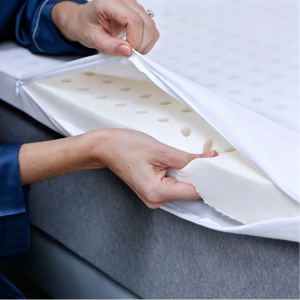
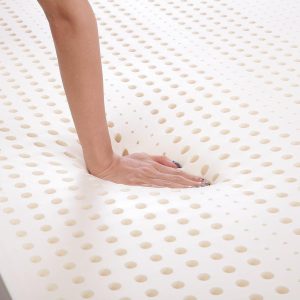
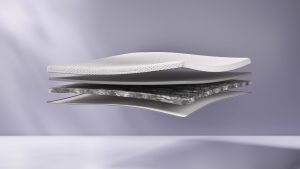
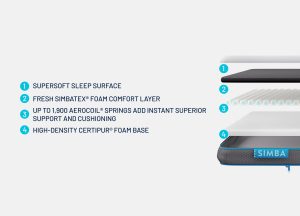
Material decides whether a topper firms the bed or only changes its surface. Reflex foam, Dunlop latex and pocketed microsprings push back against your weight, while memory foam moulds slowly around you. Gel toppers are usually memory foam with a cooling gel added, so they share that slow give. Latex follows your shape too, but springs back quickly. Among latex toppers, the Latex Sense Firmsense uses 85kg per cubic metre and is rated Firm, while the Talatex Premium uses 70kg per cubic metre at ILD 23 to 26 in 5cm and 26 to 29 in 7.5cm, which is why Talatex sells it as medium-firm.
Depth multiplies whichever material you pick. The NBF advises a topper at least 5cm deep because anything thinner “is unlikely to make a noticeable difference in comfort”, and the toppers here run from 3cm to 9cm. Brightr makes its Titan in 5cm and 8cm and says the 8cm Deluxe gives “a more noticeable transformation”. A deeper topper also raises the bed, so check that your fitted sheet is deep enough to go over both. Most pads in our 10cm mattress topper comparison are soft hollowfibre, so depth there adds no firmness.
Sizes and prices
All ten toppers come in the UK Single (90x190), Double (135x190), King (150x200) and Super King (180x200). The Talatex Premium has no Small Double (120x190), Brightr and Latex Sense add a 75x190 Small Single and a 200x200 Emperor, and Latex Sense, Panda and Talatex also sell continental sizes. Talatex prices are for the 5cm version. For one size, see our double mattress toppers and king size mattress toppers, and for every topper type our main mattress topper ranking. If your mattress is too firm rather than too soft, our memory foam topper comparison covers the softening job.