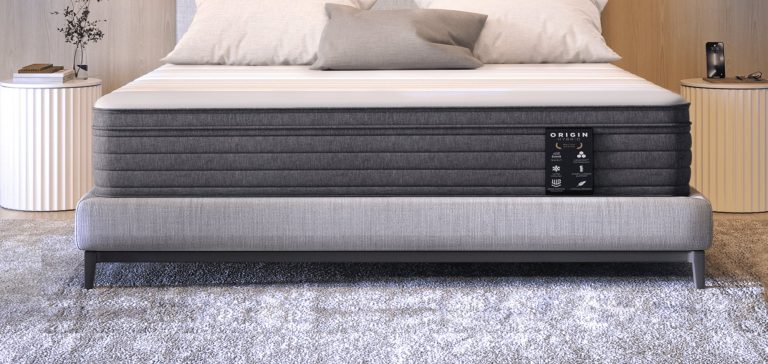


“Start at medium-firm, and choose a mattress whose trial lets you change your mind after a few weeks of sleeping on it.”
How to read a firmness scale
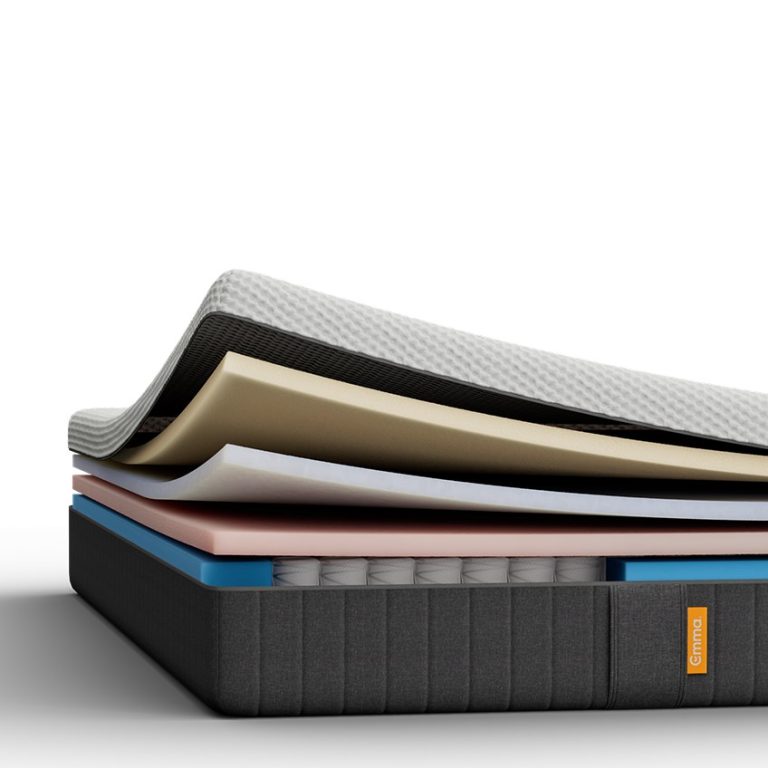
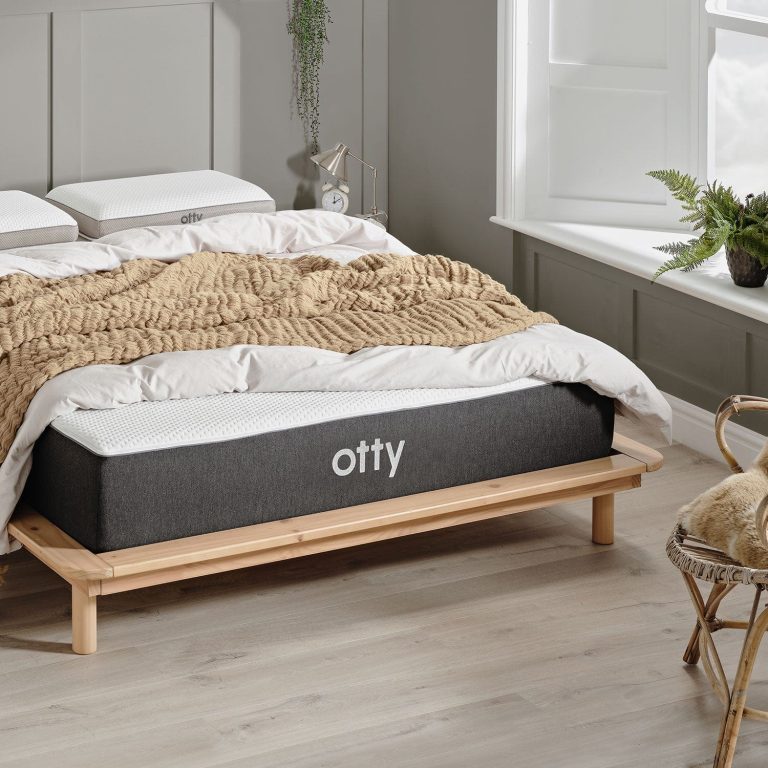
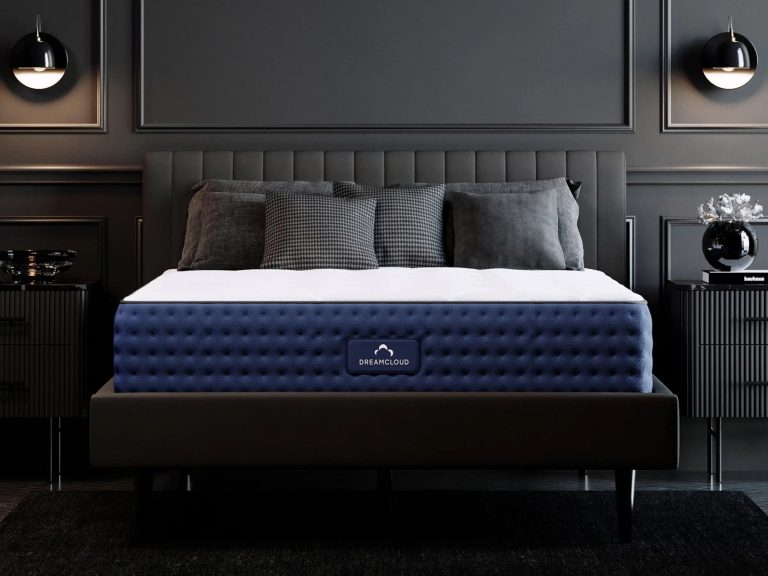
There is no shared firmness scale for mattresses in the UK. The National Bed Federation’s buying advice puts it plainly: “Remember, there is no industry-wide standard to compare firmness ratings from one manufacturer to the other.” The mattresses in this ranking show why that matters. Emma grades on 1 to 5 and calls the Original a 4 (medium firm) and the Original Pro a 3 (medium). Origin puts its Hybrid at 6 to 7 out of 10, OTTY its Original Hybrid at 7, DreamCloud the Luxury Hybrid at 6 (“Medium / Medium-Firm”) and Nectar the Classic Hybrid at 5. Read medium as the softer half of the band and medium-firm as the firmer half, and compare numbers only within one brand’s range.
Why medium-firm is the usual starting point
The case for medium-firm comes from back-pain research, and it is stronger than the case for firm. In a randomised, double-blind trial of 313 adults with chronic low-back pain, Kovacs and colleagues (The Lancet, 2003) gave one group medium-firm mattresses (5.6 on the European Hs scale, where 1 is the firmest and 10 the softest) and the other firm ones (2.3). After 90 days the medium-firm group had better outcomes for pain in bed and for disability, and the authors concluded that “a mattress of medium firmness improves pain and disability among patients with chronic non-specific low-back pain.”

Two later reviews point the same way. A 2015 systematic review of 24 controlled trials in Sleep Health found a medium-firm, self-adjusted mattress optimal for sleep comfort, quality and spinal alignment, and a 2021 review of 39 studies in the Journal of Orthopaedics and Traumatology concluded that a medium-firm mattress promotes comfort, sleep quality and alignment of the spine. Most of that evidence comes from people with back pain, so for a sleeper without it medium-firm is a sensible default, not a rule. If pain is why you are shopping, the mattresses we recommend for back pain are compared separately.
Weight, sleeping position and two sleepers
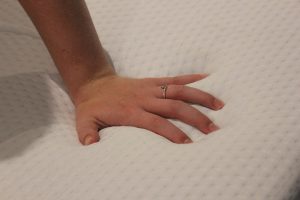
Your weight moves the target more than anything else. The NBF’s general rule is that the heavier you are, the firmer the tension you need, and it suggests a simple check on any mattress you can lie on: slide a hand into the hollow of your back. If it slides in too easily the mattress may be too hard, if it is a struggle it is probably too soft, and a little resistance suggests it is about right.
- Light side sleepers may not press far enough into a medium-firm hybrid to feel its comfort layers. A medium such as the Nectar Classic Hybrid, or one of the soft and medium-soft mattresses we rank, is the better start.
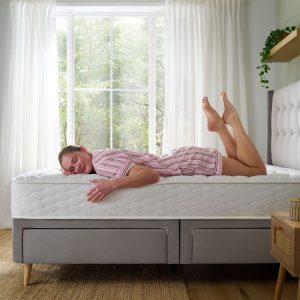
- Back and front sleepers of average weight are who medium-firm suits best, because it stops the hips sinking below the line of the spine.
- Heavier back and front sleepers compress the comfort layers further and often need the support of a firm mattress.
- Couples usually find medium-firm the easiest compromise. Where one partner is much heavier, two single mattresses zipped together let each side have its own tension.
Refund trial or exchange
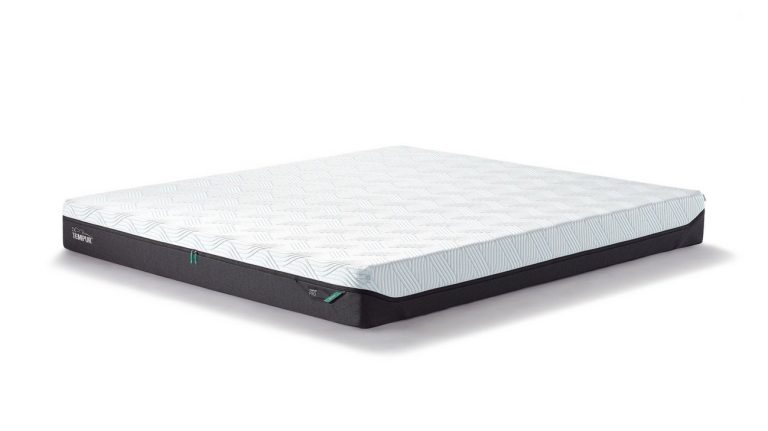
Because firmness is personal, the trial is your real test. Emma, Origin and Simba give 200 nights, OTTY 100, and DreamCloud and Nectar a full year. TEMPUR allows 100 nights but asks you to sleep on the mattress for at least 60 before returning it. Silentnight and IKEA only exchange, Silentnight for 60 nights and IKEA for 365, so you can swap the mattress for another but not get your money back. That difference matters more on this page than on most, because the step between medium and medium-firm is exactly the kind of judgement you can only make after a few weeks of sleeping on it.