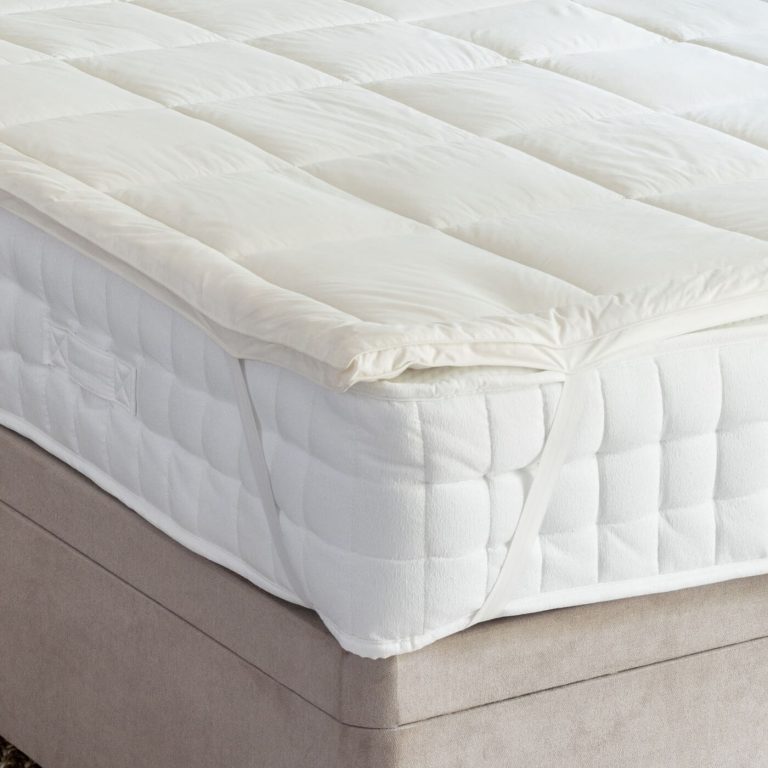
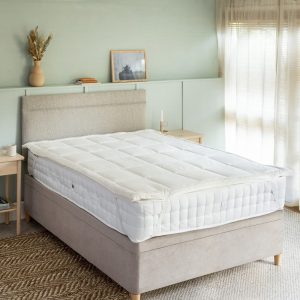
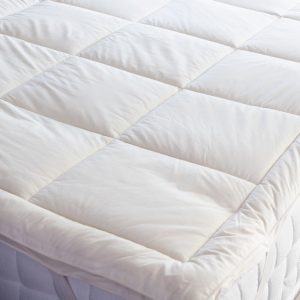
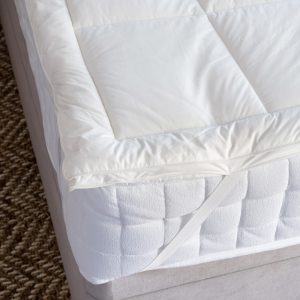
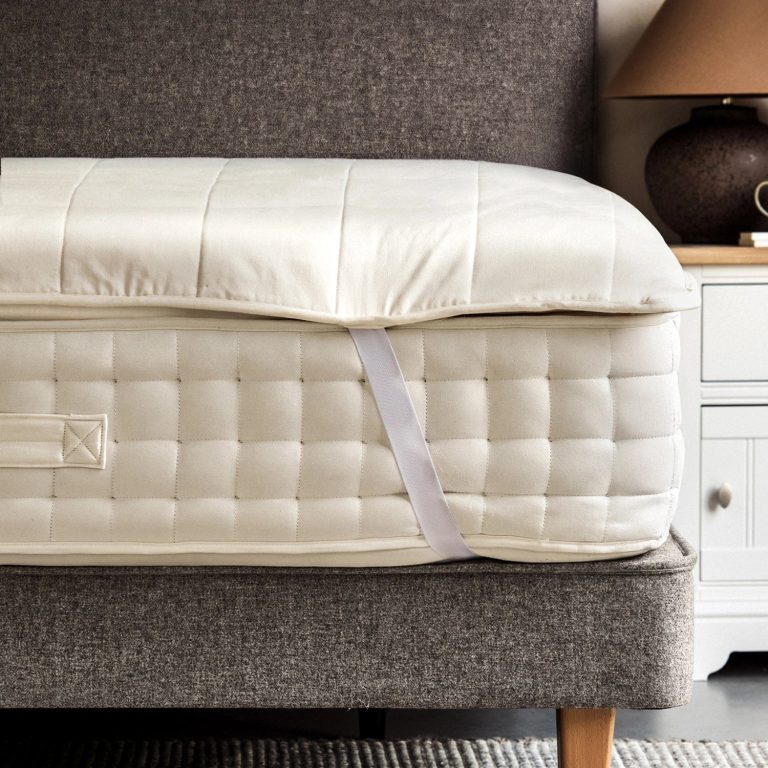
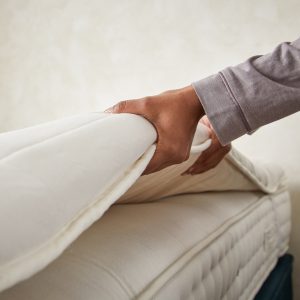
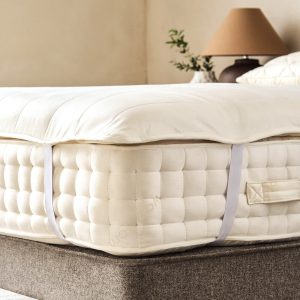
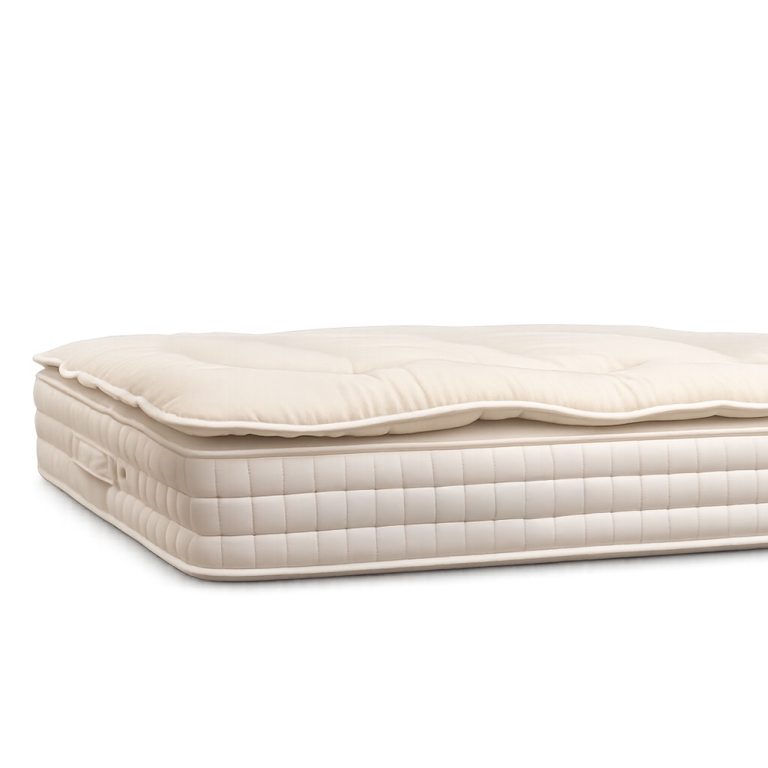
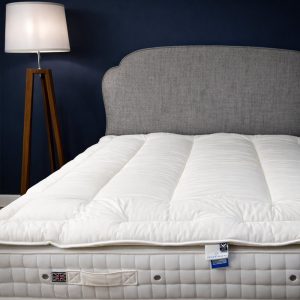
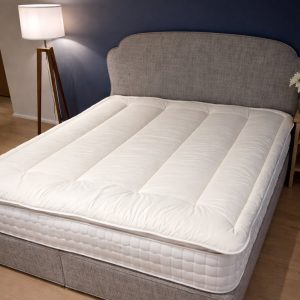
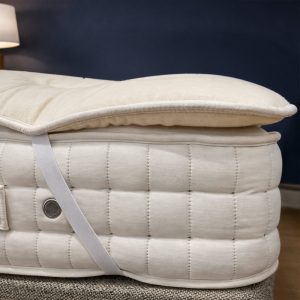
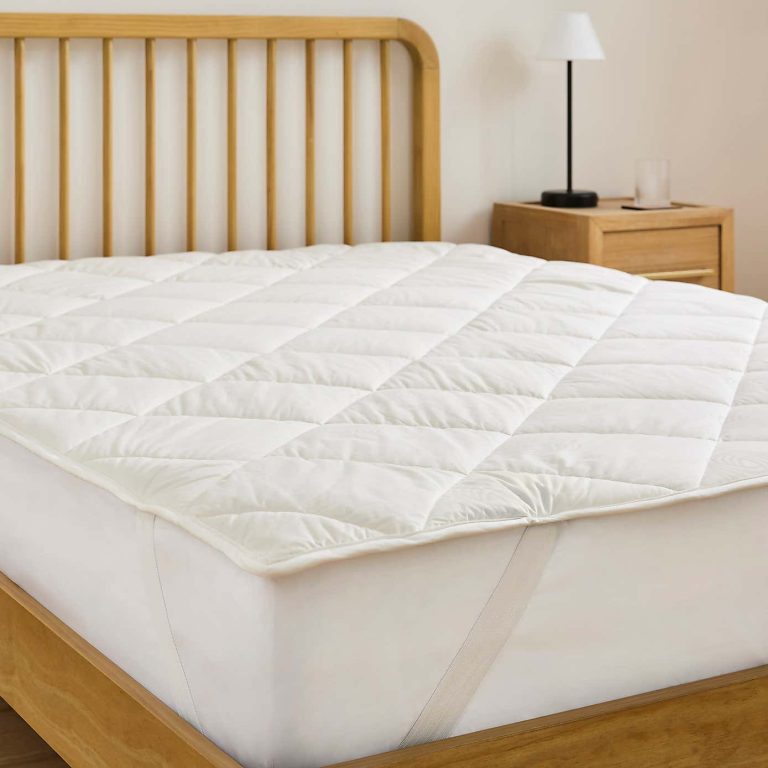
“Buy a wool topper by its declared fill weight and its care label, not by the photo. No seller in this list offers a 60°C wash for its topper, so if dust mites are your problem, budget for a washable protector on top as well.”
Check how much wool is inside
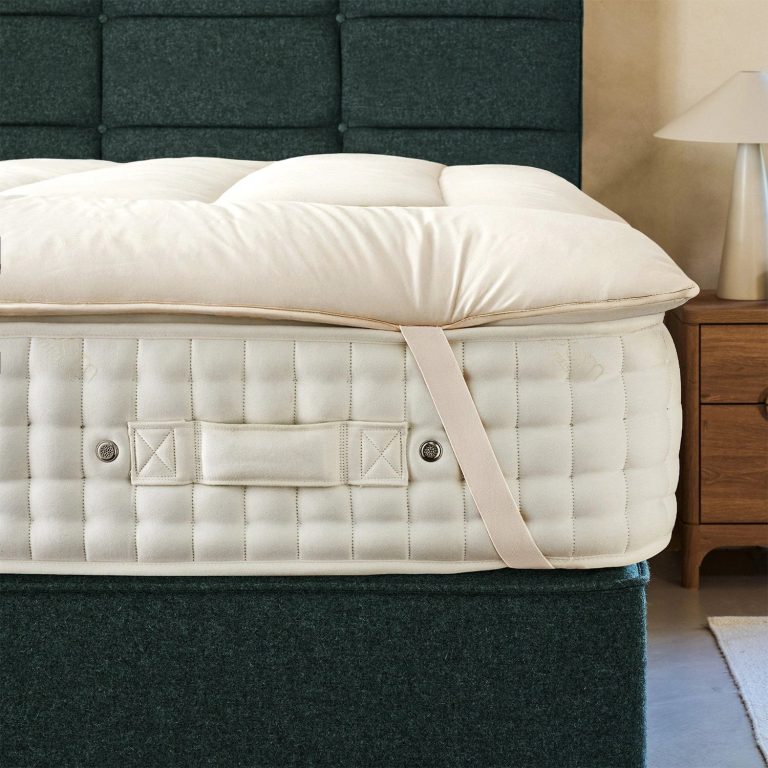
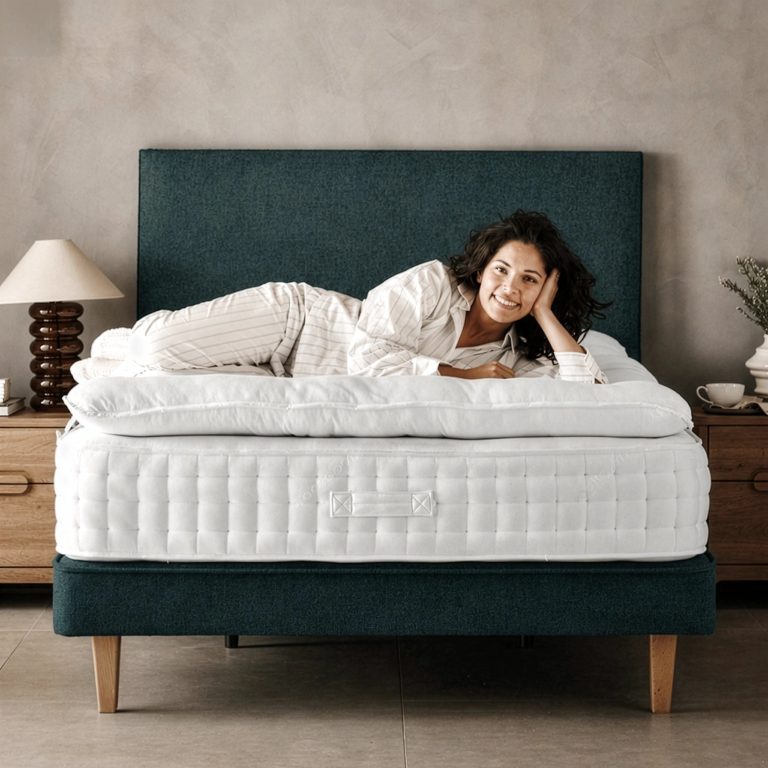
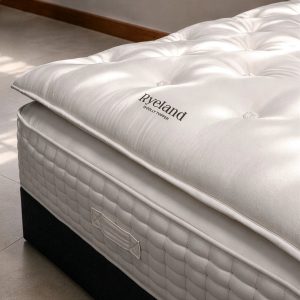
The fill weight is the most useful number on a wool topper, and only some sellers publish it. It is given in gsm, grams of filling per square metre. Woolroom states 1,000gsm for the Deluxe, 1,300gsm for the Organic, 1,500gsm across the three wool layers of the Woolly Sprung and 2,950gsm for the Ryeland. Homescapes quotes 800gsm, but half of that filling is polyester. Soak&Sleep, John Lewis, Devon Duvets, Fogarty and Naturalmat give no gsm, so depth and price are all you can compare.
Depth is a loose guide with wool. Devon Duvets says its topper has a loft of around 5cm that compresses when you lie on it. The National Bed Federation’s Bed Advice UK suggests a topper at least 5cm deep and adds that “Anything thinner is unlikely to make a noticeable difference in comfort.” The 2.5cm Soak&Sleep and Naturalmat toppers sit below that line, so treat them as a breathable layer rather than a way to soften the bed.
Pure wool, blend, and where the wool comes from
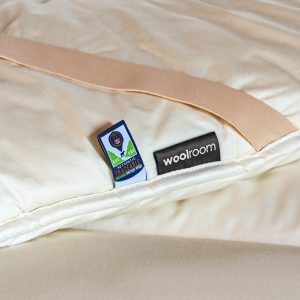
Seven of the ten toppers are filled with wool alone. The Homescapes is a 50/50 blend with polyester, and the Woolly Sprung and the Ryeland put a layer of steel microcoils under their wool. Provenance claims differ in how far you can check them. British Wool, which grades and sells the fleece of its farmer members, says it can trace every bale back to the farm and runs eight grading depots across the UK. Devon Duvets uses wool certified by British Wool. Woolroom runs its own Wool ID scheme for farm-level traceability. Naturalmat buys organic wool from Soil Association certified farms in Devon, Cornwall and Somerset. Soak&Sleep fills its topper with New Zealand wool and names China as the country of manufacture.
Wool also shapes how a topper meets British fire rules. Naturalmat states that the Frome complies with the Furniture and Furnishings (Fire) (Safety) Regulations 1988 and BS 7177 with a cotton and wool cover instead of chemical flame retardants.
What wool does for heat, and what the evidence shows
Wool’s case for hot sleepers rests on moisture. A 2024 systematic review in the Journal of Sleep Research (Li et al.) notes that wool has a higher water vapour permeability than cotton and polyester, which lets sweat evaporate and keeps skin drier. The same review screened 2,362 references and found only nine studies comparing fibre types on sleep, none of them on a wool mattress topper. In one of them, Shin et al. (2016), 17 young adults slept in a sleep laboratory at 17°C and 22°C. At 17°C they fell asleep in 9.9 minutes on average in wool sleepwear against 18.1 minutes in cotton, yet swapping the duvet between wool and polyester made no measurable difference.
So read sleep-improvement percentages on shop pages with care. What wool reliably gives you is a breathable, moisture-absorbing layer, and the room matters as much. The NHS advice on hot flushes and night sweats lists keeping your bedroom cool at night among the first things to try.
Washing, dust mites and allergies
Allergy UK‘s house dust mite factsheet says “Washing at 60 degrees centigrade or above will kill mites.” No topper in this list is sold as washable at that temperature. For anything that cannot take a hot wash, Cambridge University Hospitals NHS Foundation Trust recommends allergen barrier covers and calls them the single most effective measure, though not enough on their own. In practice that means a washable, breathable protector or cotton mattress cover over the topper.
Care splits the ten into three groups. The Fogarty and Homescapes go in a home washing machine, and Soak&Sleep calls its topper machine washable but advises a professional wash about every six months because of its size. The two quilted Woolroom toppers and the John Lewis are dry clean only. The Devon Duvets, the Woolly Sprung and the Ryeland are spot clean only. Claims that wool repels mites come from the sellers rather than from the allergy bodies quoted here, which is why the barrier cover matters whichever topper you choose.
Sizes, trials and guarantees
A wool topper is hard to judge before you sleep on it, so the returns terms carry weight. Only the four Woolroom toppers come with a 30-night sleep trial. Size ranges also differ widely, from three sizes at Soak&Sleep to ten at Woolroom, and Naturalmat will make any size to measure.
If wool is not a must, our ranking of the best mattress toppers covers every material, the memory foam comparison covers the most common alternative, our feather and latex topper rankings the other natural fills, and hot sleepers can weigh wool against gel and latex in our cooling mattress topper ranking. Prices for other sizes are in our double and king size topper comparisons.



 OEKO-TEX
 Allergy UK Seal of Approval