





To choose a mattress, make five decisions in this order: the size your bed and your bodies need, the firmness your weight and sleeping position call for, the construction that suits how warm you sleep and whether you share, a realistic budget, and the trial and returns terms that let you change your mind. It is tempting to start with the brand or the sale price and work backwards, which is how a mattress ends up too short, too hard or impossible to send back.
Start with the size: UK mattress sizes in cm
British sizes are not the continental ones. The National Bed Federation (NBF), the trade body for UK bed makers, lists the typical UK sizes below and warns that bed sizes “are not standardised”, so measure your frame before you order.
| UK name | Imperial | Metric (cm) | Width per sleeper (cm) |
|---|---|---|---|
| Small single | 2ft 6in x 6ft 3in | 75x190 | 75, one person |
| Single | 3ft x 6ft 3in | 90x190 | 90, one person |
| Small double | 4ft x 6ft 3in | 120x190 | 60 if shared |
| Double | 4ft 6in x 6ft 3in | 135x190 | 67.5 if shared |
| King | 5ft x 6ft 6in | 150x200 | 75 if shared |
| Super king | 6ft x 6ft 6in | 180x200 | 90 if shared |
Sizes from the NBF’s bed buyers’ guide; width per sleeper is our own arithmetic.
Two rules from that guide do most of the work. Your bed should be 10 to 15cm longer than the taller partner, and two people should be able to lie side by side with their hands behind their heads and elbows out without touching. A UK double is only 190cm long, so by the first rule anyone taller than about 175 to 180cm (5ft 9in to 5ft 11in) is better served by a 200cm king. By the second, a couple on a double gets 67.5cm each, a good 20cm less than a single bed per person.
Watch the European sizes too. Online brands that sell across Europe often list them next to the British ones, and Simba’s own size list, for example, includes an “EU Double” in 140x200. That mattress will not fit a UK double frame, which takes 135x190. Every UK, European and US size, with emperor and three-quarter beds, is set out in our guide to UK mattress sizes.
How firm should your mattress be?
For most adults the right firmness is medium-firm, adjusted up for a heavier body and down for a lighter side sleeper. The best-known randomised trial on the question, run on 313 people with chronic low back pain and published in The Lancet by Kovacs and colleagues in 2003, found that medium-firm mattresses beat firm ones on pain and disability after 90 days. Our back pain ranking covers that evidence in full.
Your weight moves the target most. The heavier you are, the firmer the support you need, back sleepers usually like a firmer feel than side sleepers, and partners whose weights differ by 3 stone (about 19kg) or more are often better off with a different feel on each side. Brands’ firmness scales do not line up, so compare a “6 out of 10” only within one brand’s range.
| How you sleep | Start from | Why |
|---|---|---|
| On your side, lighter build | Medium or medium-soft | Shoulder and hip need to sink in for the spine to stay level |
| On your side, average build | Medium to medium-firm, zoned | Give at the shoulder, support at the waist |
| On your back | Medium-firm | Keeps the hips from dropping below the line of the spine |
| On your front | Medium-firm to firm | A soft top lets the hips sag and arches the lower back |
| Heavier build, any position | Firm, or medium-firm with strong springs | A heavier body compresses the comfort layers further before the core takes the load |
| Couple, weights 3 stone (19kg) or more apart | Two tensions | Zip-and-link pairs or split-tension mattresses let each side differ |
For the ends of the scale, we rank soft mattresses, firm mattresses and mattresses for heavier sleepers separately. If you sit in the middle and are simply unsure, a medium-firm hybrid with a long refund trial is the lowest-risk start, and the Simba Hybrid is the one we recommend for it. Its 200-night trial gives you more than six months to find out whether medium-firm really suits you, with free collection if it does not.
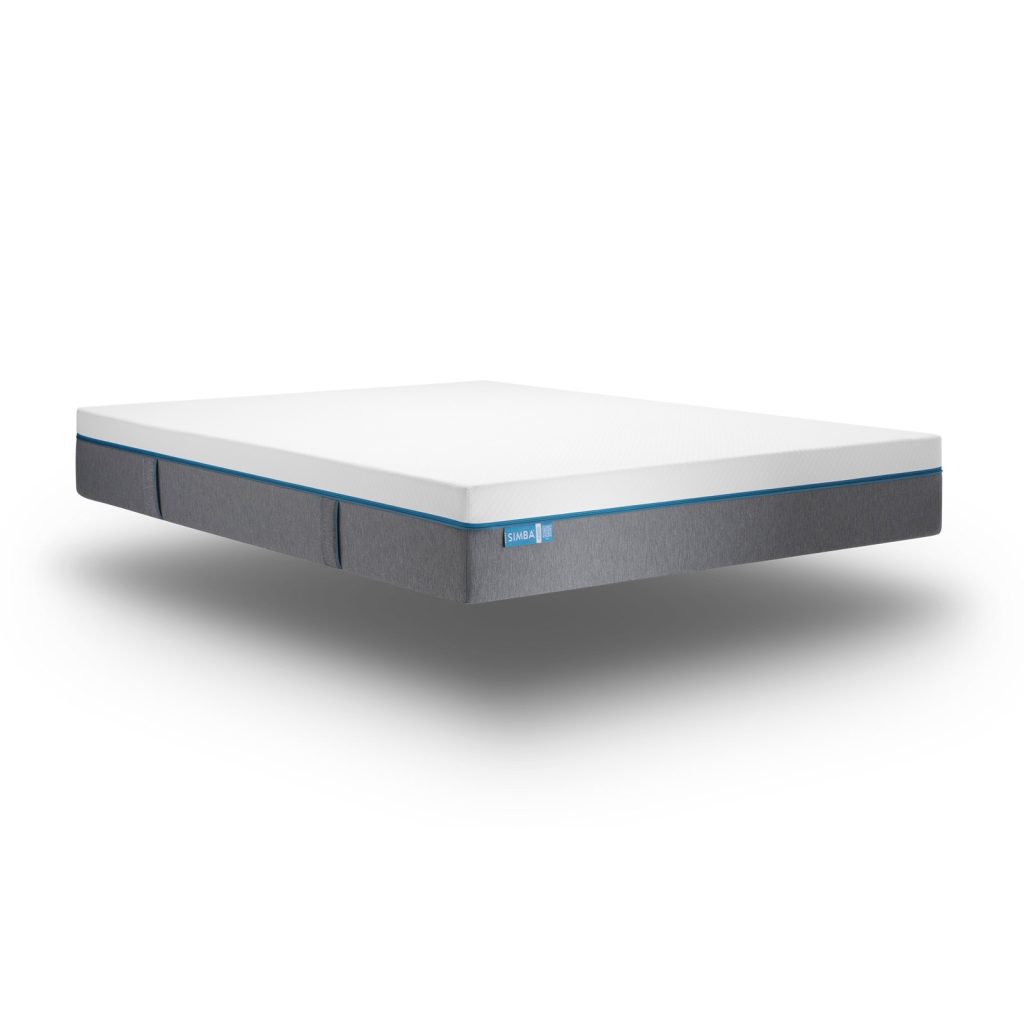
Simba Hybrid Mattress
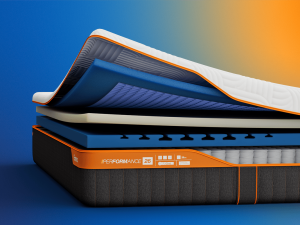
The Simba Hybrid is a 25cm medium-firm mattress pairing 1,900 Aerocoil microsprings with a nine-zone foam base, for most sleepers.
What kind of mattress do you need?
Every type comes in every firmness, so choose the build for how warm you sleep, how easily you want to move and how much a partner’s movement should reach you.
| Type | How it is built | Best for | Watch out for |
|---|---|---|---|
| Pocket sprung | Individually wrapped springs under fibre or natural fillings | Couples, warm sleepers, a traditional feel | Heavy; tufted and double-sided models need turning |
| Open coil | One interlinked spring unit | Guest rooms and tight budgets | Movement travels across the bed |
| Memory foam | Foam that moulds to body heat and pressure | Pressure relief, a still bed for light sleepers | Holds more heat, slower to move on |
| Hybrid | Foam comfort layers over springs | Most sleepers, most boxed mattresses | Quality varies with spring build and foam depth |
| Latex | Natural or blended latex, alone or over springs | Durability, a springy and cooler foam feel | Price and weight |
Spring count alone is a weak guide to quality, because wire gauge and spring height change the feel as much as the number.
If you want the traditional British build of tufted springs and natural fillings, without deep foam, the Aspire 3000 Pocket Wool Cashmere and Silk is our pick. Its independent springs keep a restless partner’s movement on their own side, and the wool, cashmere and silk filling sleeps cooler than a thick memory foam top.
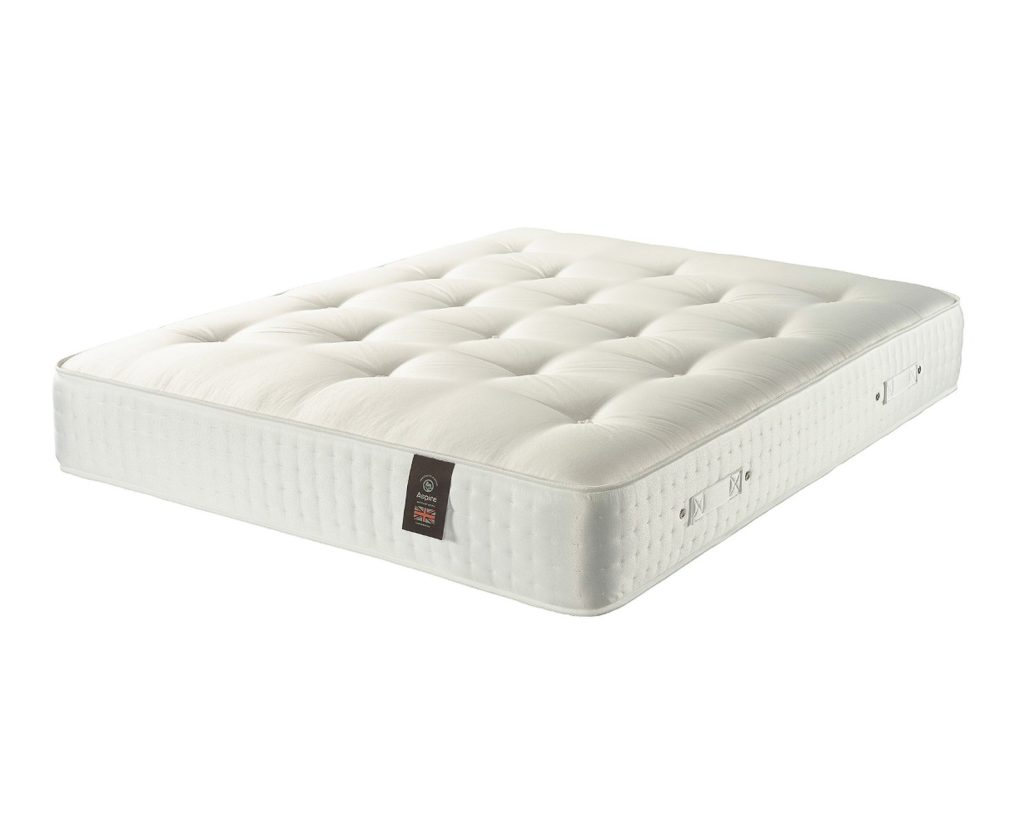
Aspire 3000 Pocket Wool Cashmere and Silk
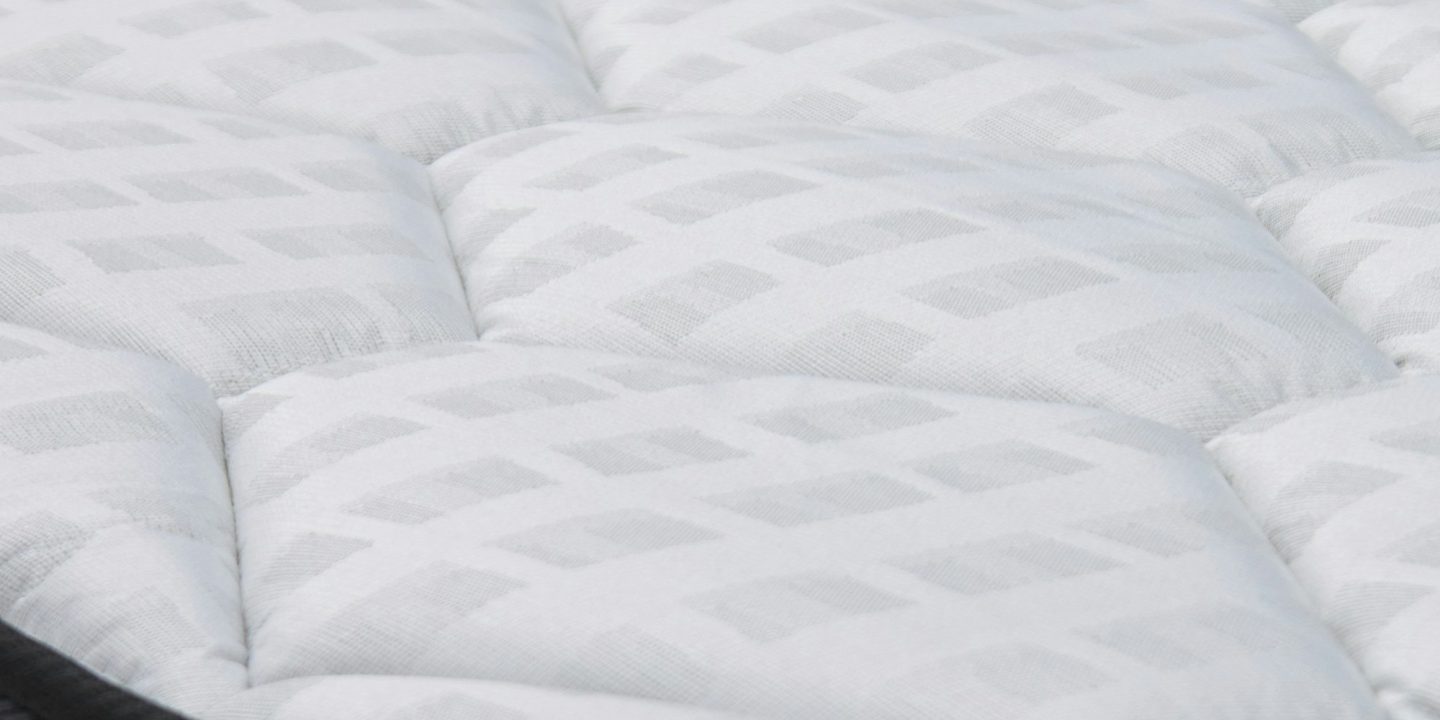
The Aspire 3000 Pocket Wool Cashmere and Silk is a hand-tufted, medium-firm pocket sprung mattress with natural fillings.
How much to spend, and when to buy
A good mattress does not have to cost four figures. In the NBF’s consumer survey published in September 2026, the mean price paid fell 16% to £543 and almost half of buyers spent less than £400. Extra money buys deeper comfort layers, more springs and natural fillings, none of which helps if the firmness is wrong.
Sale timing matters less than mattress advertising suggests, because many brands are on offer for much of the year. In 2021 the Advertising Standards Authority upheld a complaint against a Dormeo TV ad that called its Memory Classic mattress “half price”, after Dormeo’s own figures showed it at the lower price for 183 days of the year and at the “full” price for 182. Watch the price of the model you want for a few weeks and ignore countdown clocks. Current offers from the brands we cover are on our discount codes page.
The better question is when to replace. Bed makers suggest considering a new mattress after seven to 10 years, and the same 2026 survey found UK buyers replacing theirs at 6.84 years on average. The condition of the mattress is the surer guide than its age. Sagging, lumps and waking up stiffer than you went to bed are the signs to act on. If yours is younger and still flat but simply too firm, a mattress topper costs far less.
Under £300 for a double, the Aspire Invigorate is the hybrid we would buy. It is made in the UK, puts memory foam over pocket springs and has an OEKO-TEX certified cover.
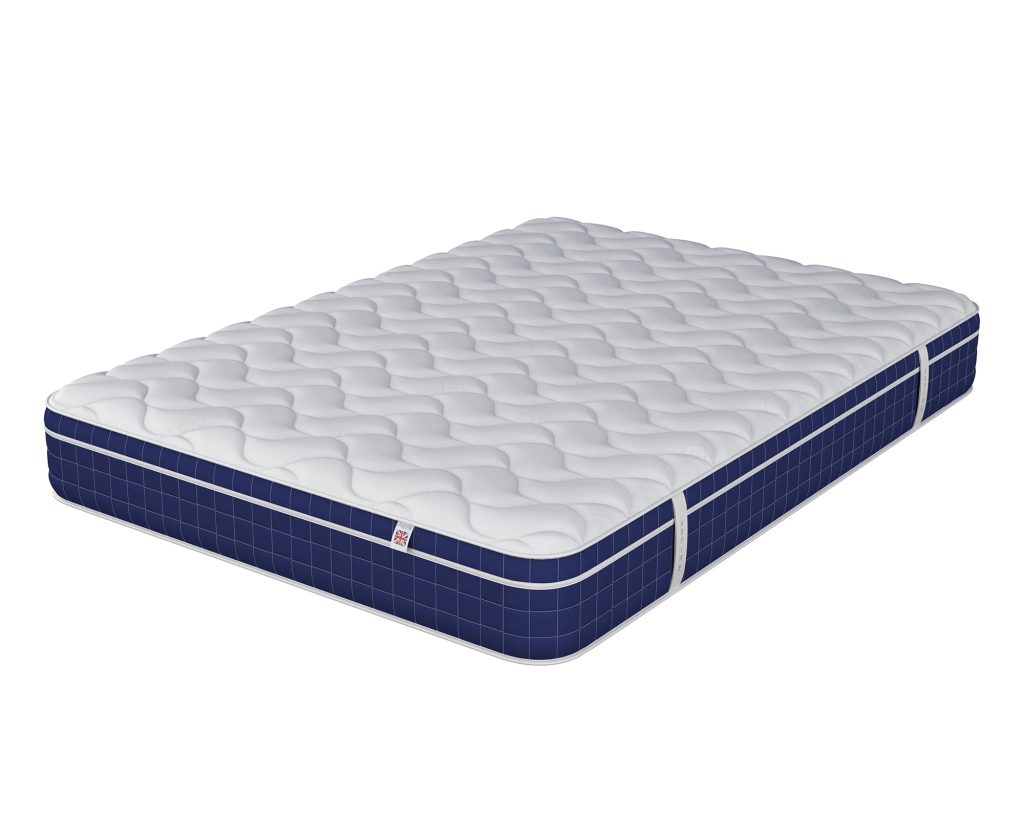
Aspire Invigorate Pocket Memory Foam Hybrid
A 23cm UK-made rolled hybrid with Pocket+ springs, memory foam and a standard or cooling cover.
What a mattress trial really covers
Home trials now run from 60 nights to a full year, but the headline number is the least important part. What matters is whether you get your money back or only a swap, how long you must keep the mattress first, and who pays for collection.
| Brand or rule | Length | Refund or swap | The small print |
|---|---|---|---|
| Nectar | 365 nights from delivery | Refund, collected free | Keep it at least 30 days; the value of any discount or free gift is deducted |
| Simba | 200 nights from delivery | Free return and collection | Covers mattresses and toppers |
| Eve | 200 nights from delivery | Return, collection free for 40 nights | A collection fee applies after night 40 |
| TEMPUR | 100 nights | Refund, minus any uplift charge | Keep it at least 60 nights, use a protector, one trial per household, direct orders only |
| Silentnight | 60 nights | Exchange only | Sleep on it at least 28 nights, claim within 60 days of delivery |
| The law, for online orders | 14 days from delivery | Cancel for a refund | Can end once hygiene-sealed goods are unsealed; made-to-measure orders excluded |
Terms as published by each brand and in the Consumer Contracts Regulations 2013, checked October 2026.
The last row is the one most buyers never read. The Consumer Contracts Regulations 2013 give you 14 days to cancel an online order, but regulation 28 ends that right for sealed goods that are “not suitable for return due to health protection or hygiene reasons” once they are unsealed, and excludes goods made to your specifications. A seller can treat an unwrapped mattress that way, so once the plastic is off, a brand’s own trial is often the only route back. Check too whether a mattress bought through a retailer rather than the brand is covered at all.
Give a new mattress time even with a generous trial. Silentnight says many sleepers take almost a month to decide, Nectar calls the first 30 days an adjustment period and TEMPUR asks for 60 nights, so a verdict after a week, good or bad, comes too early. Boxed mattresses lean on the trial most, and our mattress-in-a-box comparison sets their terms side by side.
How to test a mattress in a shop
Even if you end up ordering online, half an hour in a showroom tells you which feel and firmness you like. “There is no substitute for lying on mattresses when selecting the right one for you,” says the bed makers’ trade body, and its routine is a sound one.
- Dress for it. Wear comfortable clothes and take off your coat and shoes.
- Stay at least 10 minutes on each mattress, preferably longer, in your normal sleeping position, then on your side and your back.
- Do the hand test. Lie on your back and slide a hand into the hollow of your back. If it slides in too easily the mattress may be too hard, if it is a struggle it is probably too soft, and a little resistance suggests it is about right.
- Turn over a few times. You should be able to turn fairly easily, so a mattress you have to climb out of is too soft for you.
- Shop together if the bed is for two, and lie on it at the same time to feel how much movement travels.
- Test on a similar base. A change of base affects how a mattress feels, and an old base can shorten the life of a new mattress or even invalidate its guarantee.
- Do not shop tired or rushed, when every bed feels wonderful.
Write down the model name and firmness grade of anything you like, so you can compare it within the same brand online.
Frequently asked questions
What is the most important thing when choosing a mattress?
Firmness matched to your weight and sleeping position has the biggest effect on comfort. Size is decided first only because it is a fixed limit, set by your bed frame and your height.
What size mattress does a couple need?
A king (150x200) is the comfortable minimum for most couples. It gives each person 75cm, against 67.5cm on a double, and its 200cm length suits partners up to about 6ft 1in (185cm).
How do I choose a mattress for two people with different weights?
Choose for the heavier partner’s support, then check the softness suits the lighter one. Where the weights differ by 3 stone (about 19kg) or more, two singles zipped together or a split-tension model lets each side have its own feel.
Is a firm mattress better for a bad back?
Not usually. The 2003 Lancet trial found medium-firm mattresses led to less pain and disability than firm ones in people with chronic low back pain. If pain lasts more than a few weeks, the NHS advice is to see a GP, and that comes before spending money on a mattress.
Can I return a mattress I bought online?
Yes, within 14 days of delivery under the Consumer Contracts Regulations, but that right can end once a hygiene-sealed mattress is unwrapped. After that you depend on the brand’s trial, which may be a refund, an exchange or nothing at all.
How long does a mattress last?
Around seven years is typical, and few mattresses are worth keeping past 10. Sagging, lumps or waking up stiff are reasons to replace one sooner, whatever its age.
Our verdict
Choose the size first, and if you are taller than about 5ft 10in or share a double, look hard at a king. Then pick firmness for your weight and position, starting from medium-firm unless you are a light side sleeper or a heavier back or front sleeper. Choose the construction for heat and partner movement, and set a budget knowing that UK buyers paid £543 on average in the NBF’s 2026 survey. Favour the clearest refund trial you can find, and if a cheaper mattress comes without one, try a similar build in a shop before you order. For a ready-made shortlist, our best mattresses of 2026 and the full mattress catalogue are the next step.