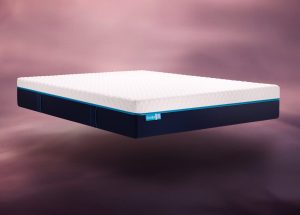
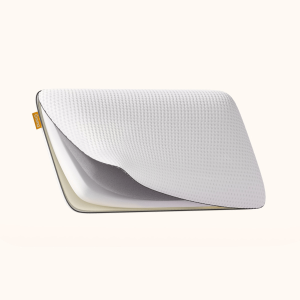
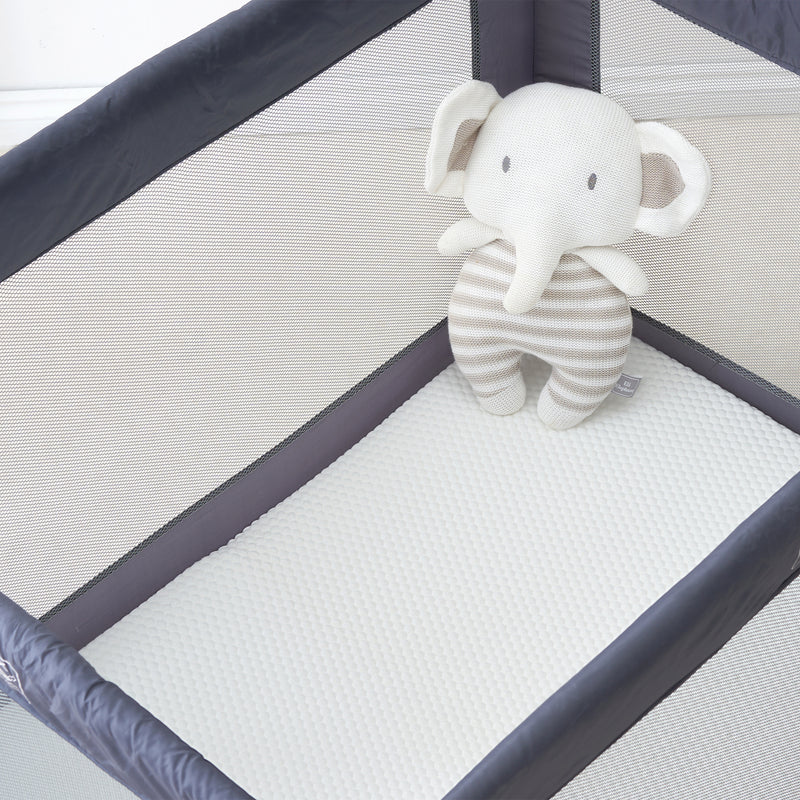
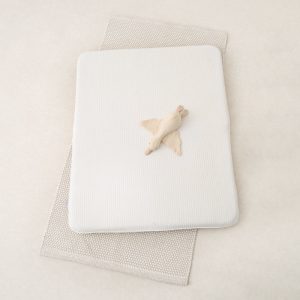
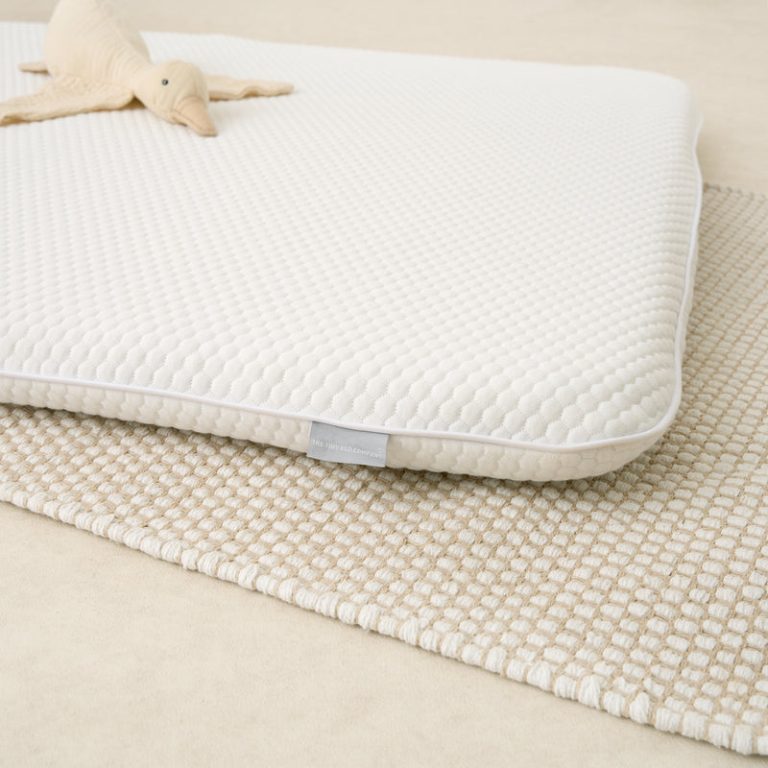
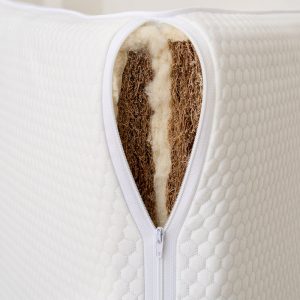
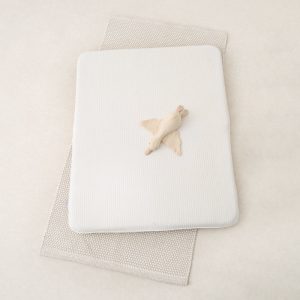
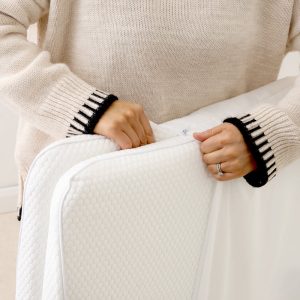
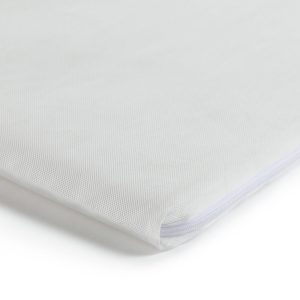
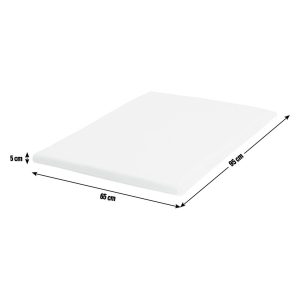
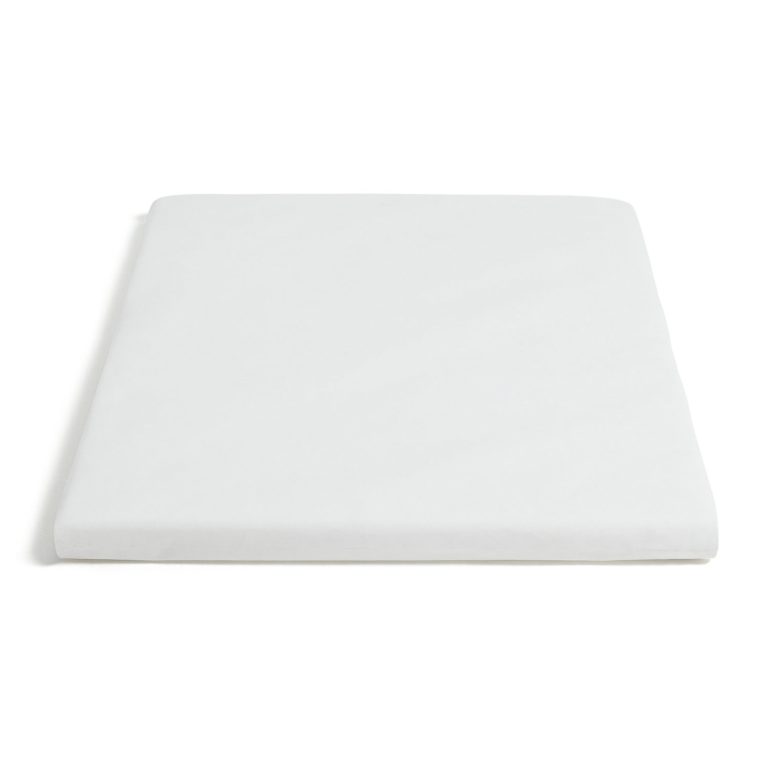
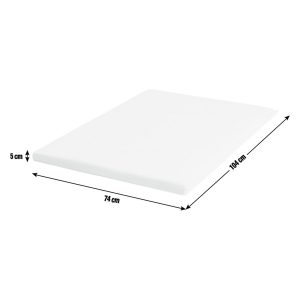
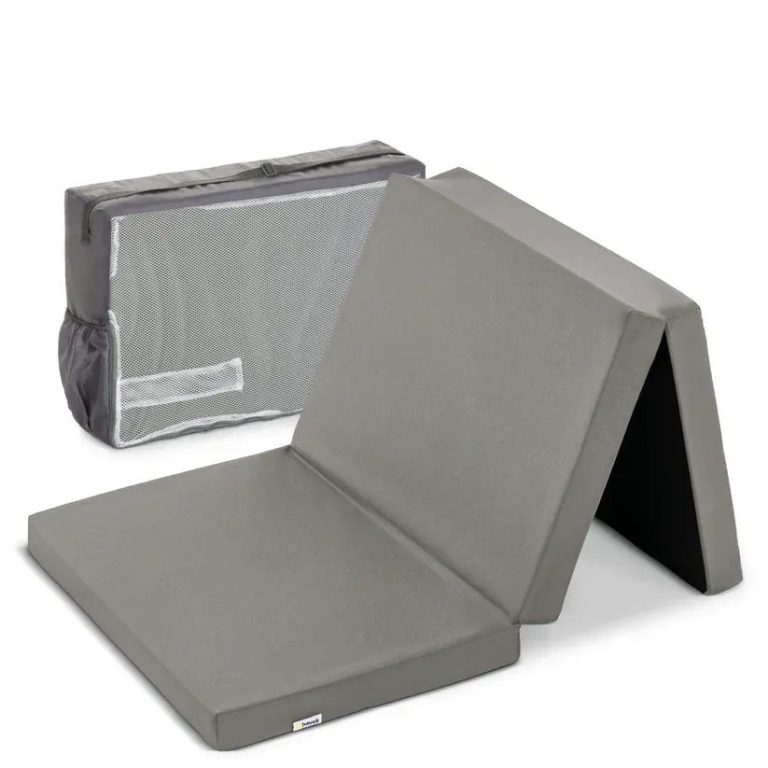
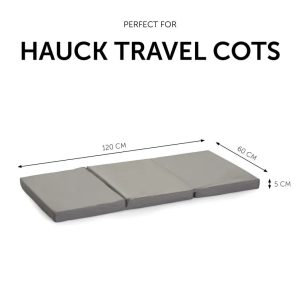
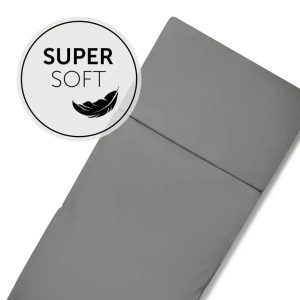
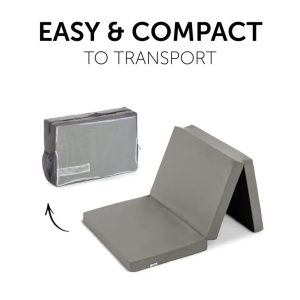
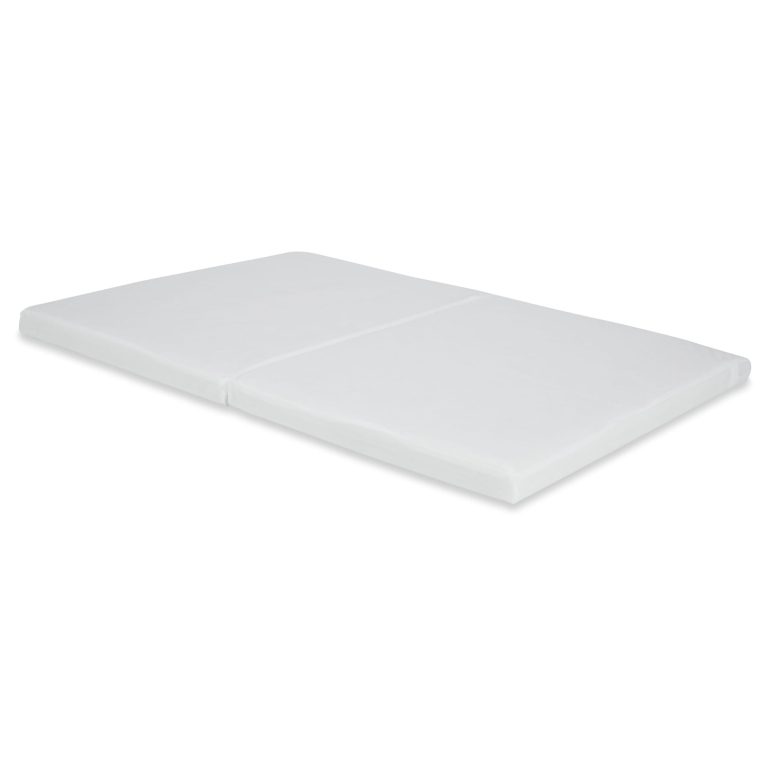
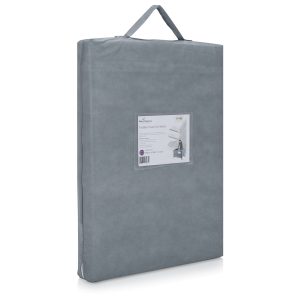
“The Tiny Dreamer Foam is the travel cot mattress we would choose, cut to the base of named cots so the fit is settled from the start. For an occasional trip in a standard 95 x 65cm cot, the Cuggl does the job nicely.”
Do you need a separate travel cot mattress?
Often you do not. Most travel cots come with a thin padded base, and that base is what the cot was safety-tested with. The Lullaby Trust says a thin mattress is not a problem in itself: “Travel cot mattresses tend to be a lot thinner than a conventional cot mattress; however, these are suitable for a main sleep space as long as they are firm, flat, in good condition and meet British Safety Standards.” A replacement makes sense when the original pad is worn, torn or missing, or when a borrowed or second-hand cot comes with a pad you cannot clean. For a full-size cot at home, our cot mattress comparison covers 60 x 120cm and 70 x 140cm models, and children moving to a bed are covered in our kids’ mattress guide.
Replace the pad, never add a layer on top
The same charity warns that some replacement mattresses “can create a gap between the mesh sides and the base of the cot”, and asks parents to check the cot maker’s guidance first. BabyDan puts the point plainly on its own folding mattress: the European standard its travel cot is approved to does not take an added mattress into account, and its 60 x 120cm mattress needs a cot no larger than 63 x 123cm inside, a margin of 3cm each way. Every mattress in our ranking goes in place of the original pad. Quilted toppers and overlays that sit on top of a travel cot mattress soften the surface, which works against the firm, flat sleeping surface the NHS recommends, so we leave them out.
Measure the base, then match the size
Travel cot bases are not standardised, and a difference of a few centimetres is enough to leave a gap. Measure the inside of the cot at floor level, length and width, with the sides locked, and buy the mattress made for that size. If you can slide a flat hand down between mattress and side, it is too small. The table shows the internal sizes sellers list for common travel cots and which mattress in our ranking is made for each.
Model sizes as listed by The Tiny Bed Company and Hauck stockists, October 2026.
Depth, core and cover
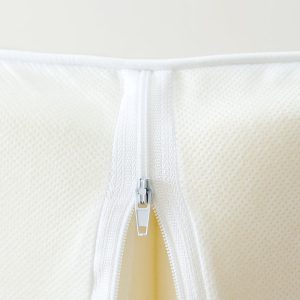
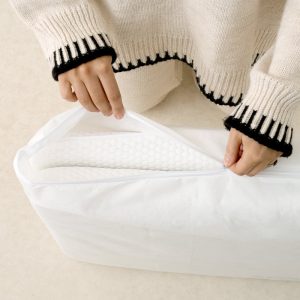
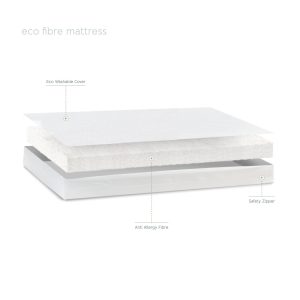
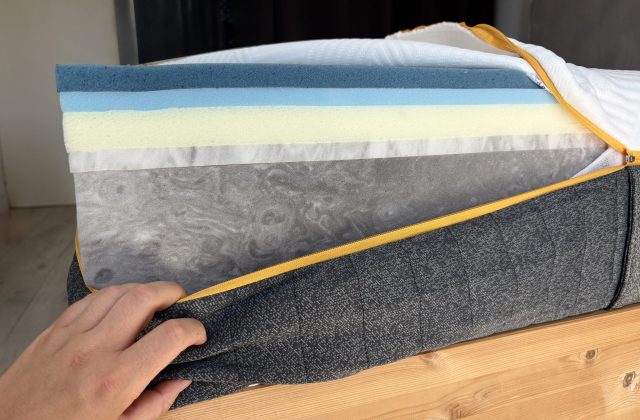
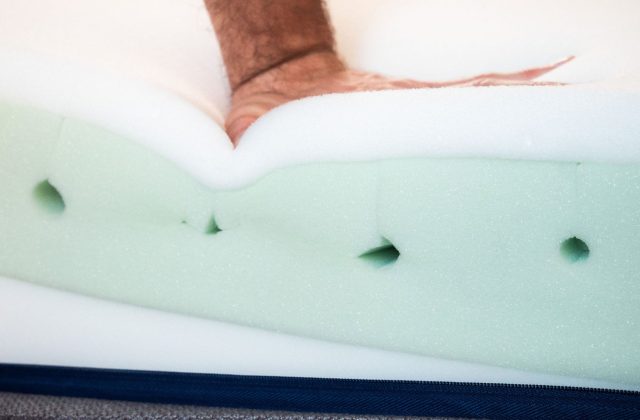
Thicker is not safer. The mattresses we rank are 3cm to 5cm deep, roughly the depth of the pads they replace, and a firm foam, fibre or coir core matters more than an extra centimetre. A cover that zips off for the washing machine is worth more on a travel mattress than at home, because holidays rarely come with a spare. If the cover is not waterproof, add a fitted waterproof protector made for the same size.
Which standard to look for
BS EN 16890:2017+A1:2021 is the European standard for mattresses used in children’s cots, travel cots and cribs, and its scope names travel cots explicitly. Few sellers state it. Argos does for the larger Cuggl. The Tiny Bed Company quotes BS 1877 Part 10 for its travel range, which BSI lists as withdrawn in December 2023 and partly replaced by EN 16890 for cot mattresses. A stated standard is not proof of safety on its own, but it is the one question worth emailing a seller about before you order for a newborn.