






To clean a mattress, strip the bed, vacuum the surface and seams, treat each stain with a cleaner suited to it, deodorise with bicarbonate of soda, and let the mattress dry completely before you make the bed again. Mattress makers agree on very little else, but every one we checked warns against soaking the mattress, because damp foam and fillings take days to dry and invite mould.
How to clean a mattress, step by step
A routine clean takes about an hour of work and an afternoon of drying. A vacuum and spot clean every three to six months, with a deeper clean no more than twice a year, is the schedule Silentnight recommends and suits most households.
- Strip everything. Sheets, pillowcases and the mattress protector come off and go in the wash at the hottest temperature their labels allow.
- Vacuum slowly. Use the upholstery or soft brush attachment, both sides if the mattress turns, and work along the seams and the edge piping, where dust and skin collect. The exception is a tufted mattress with natural fillings, which takes a soft brush only (see the table further down).
- Treat stains one at a time. Blot with a cloth that is damp, not wet, and work from the outside of the mark inwards so it does not spread. The method for each stain is in the next section.
- Deodorise. Sprinkle bicarbonate of soda over the whole surface and leave it for 30 minutes, or several hours for smells, then vacuum it off.
- Dry it properly. Open the windows and leave the bed bare until every damp patch has gone. A hairdryer on a cool setting speeds up a small patch.
How to remove stains: the method for each one
Each stain needs its own treatment, but blood comes with one firm rule. Use cold water, because hot water sets blood into the fibres.
| Stain | What to use | What to avoid |
|---|---|---|
| Blood | Cold water; then an upholstery cleaner, or 3% hydrogen peroxide dabbed on and blotted | Warm or hot water; peroxide on a coloured cover without a patch test |
| Urine | Blot at once, then follow the method in the next section | Rubbing, soaking the patch, bleach |
| Sweat (yellow patches) | A paste of bicarbonate of soda and water for 30 minutes, wiped off with a damp cloth, dried, then vacuumed | Scrubbing hard on a quilted top |
| Vomit | Lift solids first without spreading them, then treat as urine | Pressing the solids into the cover |
| Red wine | Blot with a damp cloth, then sprinkle salt to draw it out | Hot water |
| Fruit juice and other drinks | Blot, then a proprietary stain remover or upholstery cleaner sparingly | Neat detergent, which leaves a sticky residue |
Methods as published by the National Bed Federation (NBF) on its Bed Advice site, Emma’s stain guide and Silentnight, checked October 2026.
Two warnings cover every row. Test any cleaner on a hidden corner first, since hydrogen peroxide can lighten a coloured cover, and never mix bleach with another cleaner.
Old yellow sweat marks rarely come out completely, and they come back if nothing stops the sweat reaching the mattress. If you run warm, the lasting fix is a waterproof protector with a breathable top, in Tencel or bamboo.
How to clean wee from a mattress
Speed decides how well urine comes out, whether it is a toddler’s wee or a pet’s. Strip the bed, then press a dry towel or kitchen roll into the wet patch, changing it until nothing more comes up, without rubbing. Then sponge the patch with a warm solution of mild detergent or upholstery shampoo and wipe it with clean cold water. A spray of equal parts white vinegar and water is the alternative if you have no upholstery cleaner. Once the area is only damp, cover it in bicarbonate of soda and leave it for a few hours before vacuuming.
Dried urine and its smell need more time than effort. Emma’s recipe for older urine stains mixes 3% hydrogen peroxide with bicarbonate of soda and a few drops of washing-up liquid. Mist it lightly over the patch only, let it dry, and vacuum the residue 8 to 10 hours later. A smell that returns on warm nights after two or three rounds probably means the urine reached the core, where no surface method reaches.
For a child who wets the bed, the NHS advice is practical: use waterproof covers on the mattress and duvet, and do not punish the child. A waterproof protector turns a night-time accident into a wash load. For accidents we recommend the Simba TripleShield Bamboo. It stops liquid where a quilted cotton protector only slows it, thanks to a thin thermoplastic polyurethane (TPU) layer that Simba says is tested to hold back a 1,500mm column of water. Its care label asks for a gentle cycle with no temperature given, which makes it a protector for accidents rather than for a dust-mite allergy.
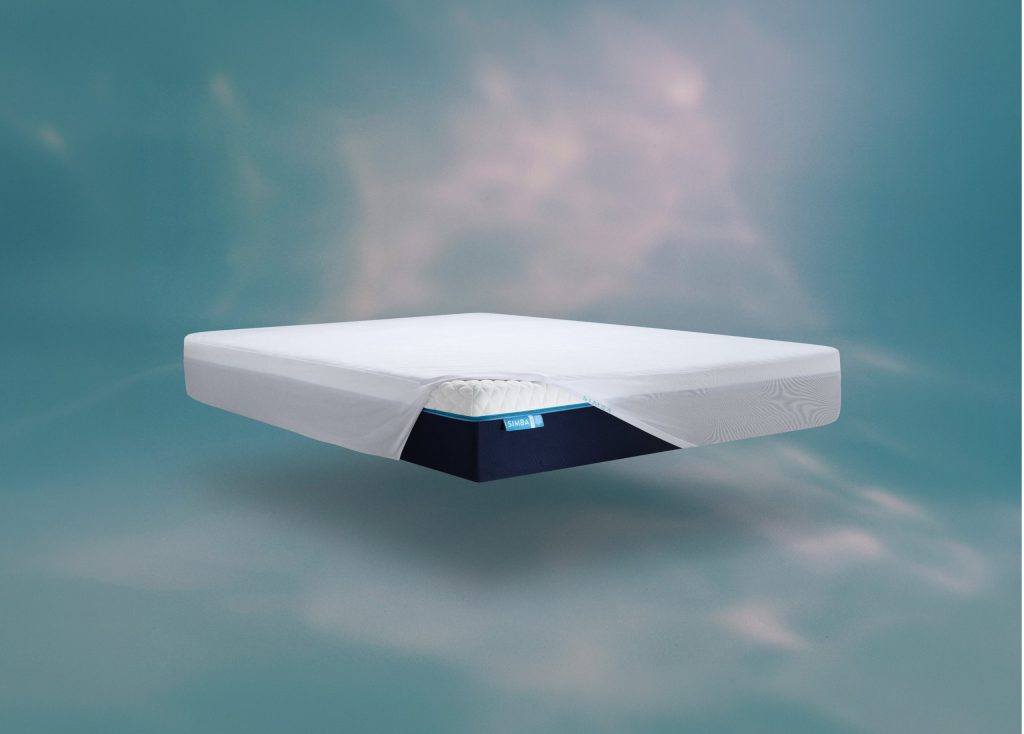
Simba TripleShield Bamboo Mattress Protector
A quiet, fully waterproof protector with a bamboo-rayon top, our pick for bedwetting and spills on mattresses up to 40cm.
Memory foam, sprung and natural-filled mattresses: what each one tolerates
The method has to suit what is inside. Foam holds water like a sponge and dries slowly from the middle, while a traditional mattress with natural fillings is damaged by a vacuum before it is damaged by water. Check the label or the maker’s care page before you start, because the rules below differ by brand.
| Mattress | Water | Steam | Vacuum | Cover |
|---|---|---|---|---|
| TEMPUR memory foam | Towels to soak up spills; at most a barely damp cloth wiped lightly over a stain, no chemicals or detergent | No | Soft brush on the cover | SmartCool: top at 40°C or below, base at 60°C or below, no tumble dryer |
| Other memory foam | Mild detergent, sparingly, then blot | Avoid | Soft brush attachment | Check the label |
| Pocket sprung | Warm water and mild soap, sparingly, then a cold rinse and a towel | Light surface steam if the label allows | Upholstery attachment | Spot clean unless the label allows washing |
| Tufted, natural fillings | Dry cloth for small spills, damp cloth and mild soap for larger ones | Avoid; keep natural fillings dry | Never, it displaces the fillings; use a soft brush | Not removable |
From TEMPUR’s SmartCool care page, Simba’s help centre for its tufted Natural Hybrid range, and Silentnight, checked October 2026.
Of the makers we checked, TEMPUR sets the strictest rules. Its UK care page asks owners not to “wash, sponge or dry clean the mattress itself”. Some older TEMPUR covers, the Original, Cloud and Sensation Deluxe 22 and 27, cannot be machine washed at all, and TEMPUR’s cleaning guide calls the TEMPUR-FIT protector it includes with every mattress essential for those. Latex is a foam too and should never be soaked, but care rules vary more between latex makers, so the label decides. If you are still choosing between these builds, our rankings of memory foam, latex and pocket sprung mattresses note which ones have a removable, washable cover.
Dust mites, bed bugs and mould
Dust mites live in almost every mattress, and no home cleaning removes them for good. What reduces them is heat on everything that can be washed and a barrier on what cannot. The NHS advice for allergic rhinitis is to use synthetic bedding and covers, wash bedding regularly at 60°C and above, and vacuum with a high-efficiency (HEPA) filter. A mattress cannot go in the machine, so cover it instead. “Use allergen-proof barrier covers on all mattresses, duvets, and pillows,” advises Allergy UK, whose factsheet also suggests keeping indoor humidity between 30% and 50%, with a dehumidifier if needed. If you are buying a protector for an allergy, check its wash temperature first, since many stop at 40°C. A 2008 Cochrane review of dust-mite measures, mattress encasings included, found no effect on asthma symptoms, so treat a cover as hygiene rather than treatment. If you are replacing the mattress anyway, our hypoallergenic mattress ranking compares the options.
Cleaning will not get rid of bed bugs. The signs on a mattress are small brown spots (their droppings), spots of blood on the sheets and bites. The NHS says to wash affected bedding at 60°C and tumble dry it on a hot setting for at least 30 minutes, to put anything unwashable in a plastic bag in the freezer for two to three weeks, and to call your local council or a pest control service, because DIY methods are “unlikely to get rid of bedbugs completely”.
Mould is the one stain that usually means the end of the mattress. Government guidance on damp and mould in the home warns that absorbent soft furnishings “may have to be thrown away” once mouldy, as removing the mould completely may be difficult or impossible, and it links damp and mould to asthma and respiratory infections. A small surface patch on a cover that zips off can be washed; black spots on the mattress itself, or a musty smell from inside, cannot be scrubbed away. Find the cause too, which is often condensation under a mattress on a solid base or the floor, or a mattress made up again before it had dried.
Mattress cleaning machines and professional cleaning services
The machines sold as mattress cleaners do one of two jobs. Handheld mattress vacuums, often with a UV lamp, lift dust and skin from the surface, and a household vacuum with a HEPA filter and an upholstery tool does the same job. Spot-washing machines spray a cleaning solution and suck it back up, which suits a sprung or hybrid mattress better than foam, as long as you finish with several dry passes to lift the water back out. Skip them on an all-foam mattress.
A professional mattress cleaning service is worth considering for a large or old stain on a sprung mattress, or when moving out of a rented flat. Hot water extraction, which cleaners often call steam cleaning, is the standard method, and the national cleaning firm Fantastic Services puts the drying time at four to eight hours in a ventilated room. Its 2026 price guide gives these ranges.
| Mattress size | Most of the UK | London and the South East |
|---|---|---|
| Single | £20 to £40 | £30 to £50 |
| Double | £35 to £50 | £45 to £65 |
| King | £45 to £60 | £55 to £80 |
| Super king | £55 to £80 | £70 to £100 |
Prices include VAT; a single booking may be charged a minimum call-out instead.
Tell the cleaner what the mattress is made of, and check the maker’s care rules before booking.
Keeping a mattress clean, and when to replace it
A mattress protector saves most of this work. A waterproof one in a double costs £69 from Simba, a little more than one professional clean of a double, and it goes straight in the washing machine. Our mattress protector comparison rates wash temperatures and waterproofing. If you use a mattress topper, the protector goes over it. After that, one daily habit does the most. Pull the duvet back for about 20 minutes each morning with a window open, so the night’s moisture leaves before the bed is made.
The NBF’s consumer site recommends replacing a mattress every seven years, by which point it has seen more than 20,000 hours of use, and notes that we shed over a pound of dead skin a year in bed. Replace it sooner if mould has reached the inside, if a urine smell keeps coming back, if bed bugs survive professional treatment, or if it sags, has lumps or leaves you stiff in the morning. Our guide on how to choose a mattress covers what to look for next.
If you replace it, choose a mattress whose top cover comes off, which makes the next clean far simpler. If a washable cover is your priority, the Simba Hybrid Essential is the one we would buy. The cover, not the springs, decides how easy a mattress is to keep clean, so there is no need to pay for a dearer model to get it: the Essential is the lowest-priced adult hybrid Simba makes, and the 200-night trial lets you send it back if it does not suit you.
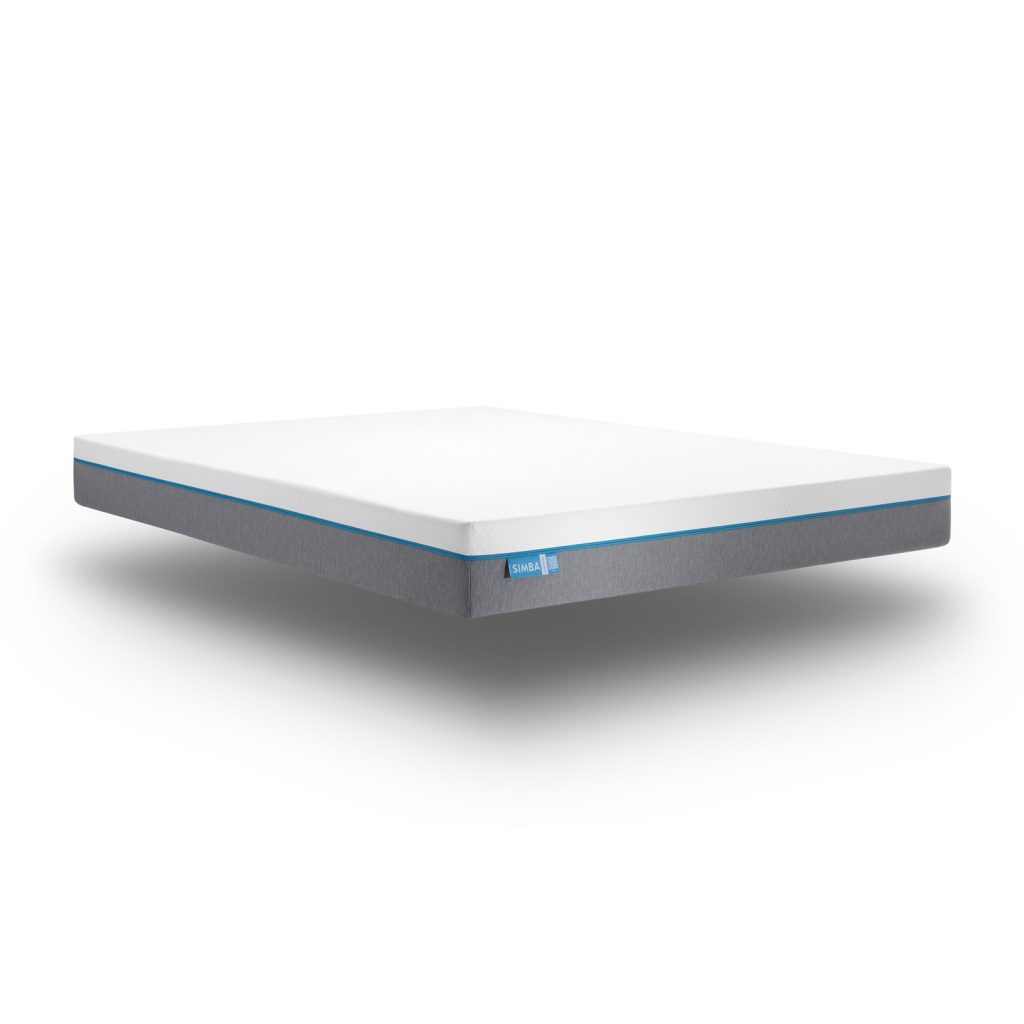
Simba Hybrid Essential Mattress
Our pick for an easy-clean bed: a 20cm hybrid whose knitted top zips off for a 40°C machine wash.
Frequently asked questions
How often should you clean a mattress?
Vacuum and spot clean every three to six months, and deep clean no more than twice a year. Every six months suits most beds, with a mattress protector in between that you wash far more often.
Does bicarbonate of soda clean a mattress?
Bicarbonate of soda deodorises a mattress and draws out moisture, but it does not remove stains on its own. Spread it over the whole surface for about 30 minutes after spot cleaning, or for a few hours on a urine patch, then vacuum it off.
Can you steam clean a mattress?
You can steam clean a sprung or hybrid mattress lightly if its maker allows it. Keep a garment steamer moving so it never drips; it freshens the surface, but covers and hot washes do more against dust mites. Avoid it on memory foam.
Can you wash a mattress cover in the washing machine?
Only if the label says so, and usually at 40°C on a reduced spin with no tumble drying. A few covers take more, TEMPUR’s SmartCool base cover up to 60°C, for example. Covers on tufted mattresses and some older TEMPUR models cannot be removed or machine washed.
How long does a mattress take to dry after cleaning?
A spot-cleaned patch dries in a few hours in a ventilated room; after a professional extraction clean, allow four to eight hours. Leave the bed unmade until no damp patch remains.
Is it safe to sleep on a mattress with mould?
It is better not to. UK government guidance links damp and mould to asthma and respiratory infections and treats mouldy soft furnishings as hard or impossible to clean fully, so a mattress with mould beyond its removable cover should be replaced.
Our verdict
Judge every cleaning method by how little liquid it needs. Cold water first for blood, blotting for urine, bicarbonate of soda for smells, and nothing but a barely damp cloth on a TEMPUR. When the damage has reached the inside of the mattress, replace it rather than scrub harder. When the mattress itself is due, our ranking of the best mattresses of 2026 is the place to start.